The Canadian school system looks different depending on which province you live in, and that can make it surprisingly hard to know what to expect at each stage. The grade groupings change, the terminology changes, and the academic expectations shift in ways that are not always obvious until your child is already in the middle of them. This guide explains how the Canadian K-12 system works from Kindergarten through to Grade 12, what changes at each transition, and what parents can do to support their child at every stage – particularly in mathematics, where gaps at one level have a measurable impact on the next.

How the Canadian school system is structured: What is K–12?
Unlike countries with a single national curriculum, Canada manages education at the provincial and territorial level. This means there is no single definitive answer to questions like “when does high school start?” or “is there a middle school?” The structure genuinely varies depending on where you live.
The Canadian school system divides K–12 education into three broad stages, though the exact grade groupings vary by province. That said, most students progress through three broad stages:
| Stage | Grades | Ages | Province info |
|---|---|---|---|
| Elementary school | Kindergarten to Grade 6 or 8 | 4 to 12 | Ends at Grade 6 in Ontario, Grade 7 in BC, Grade 8 in Alberta |
| Middle school or junior high | Grades 7 to 8 or 7 to 9 | 11 to 14 | Not all provinces use this term |
| High school | Grades 9 to 12 or 10 to 12 | 14 to 18 | Quebec ends at Grade 11 before CEGEP |
Across the Canadian school system, developmental goals at each stage are consistent even when grade groupings differ. What a Grade 8 student is expected to know in Ontario and a Grade 8 student in Alberta are broadly comparable, even if one is still in elementary school and the other is already in junior high.
Elementary school in Canada (Kindergarten to Grade 6 or 8)
Elementary school is the foundation of the Canadian school system and where children develop the academic and social skills that everything else builds on. The years from Kindergarten to roughly Grade 6 are more formative than they might appear from the outside – not because the content is particularly advanced, but because the habits, attitudes, and foundational skills developed here shape how children approach learning for the rest of their school lives.
At this stage, children typically stay with one main class teacher who covers most subjects. Learning is structured, teacher-guided, and built around concrete activities and discussion. The emphasis is on understanding rather than speed, and on building confidence alongside knowledge.
What children learn at elementary school
The core focus areas in elementary school are literacy and numeracy. Children learn to read, write, and communicate clearly. In mathematics, the focus is on number sense, basic operations, fractions, measurement, introductory geometry, and the beginnings of data literacy.
In the later elementary years, particularly Grades 5 and 6, the content starts to become more abstract. Fractions become more complex. Pattern recognition and early algebraic thinking begin to appear. This is often the first point where parents notice differences between children who have strong foundations and those who have gaps: what looked like minor struggles in Grade 3 can become more visible by Grade 6.
How math develops in elementary school
Elementary math is often underestimated by parents because the numbers are small and the concepts seem simple. But the way children think about those concepts matters enormously for what comes later.
A child who understands why 3/4 is larger than 2/3, rather than just knowing it, will handle algebraic fractions in Grade 8 without significant difficulty. A child who has learned to count on their fingers rather than develop number sense will find mental arithmetic increasingly laborious as numbers get larger and operations get more complex.
Competition math is also accessible at this stage for curious and able students. Math Kangaroo, open to students from Grade 3 to Grade 6, introduces children to problem-solving that goes beyond the curriculum in a way that is engaging rather than pressured. Students who participate in even a small amount of competition math during elementary school typically arrive at middle school with noticeably stronger problem-solving instincts.
How parents can support elementary school learning
The most effective thing parents can do at this stage is reinforce the idea that mathematics is about understanding and reasoning, not memorisation. When a child asks why a rule works, take the question seriously rather than redirecting them to the answer. Curiosity at this stage is the raw material for mathematical ability at every stage that follows.
Practically, this means prioritising understanding over speed when reviewing schoolwork, encouraging children to explain their reasoning out loud, and making sure that struggles with fractions or multiplication do not get quietly set aside because the child managed to pass the test anyway.
Middle School in Canada (Grades 7 to 9)
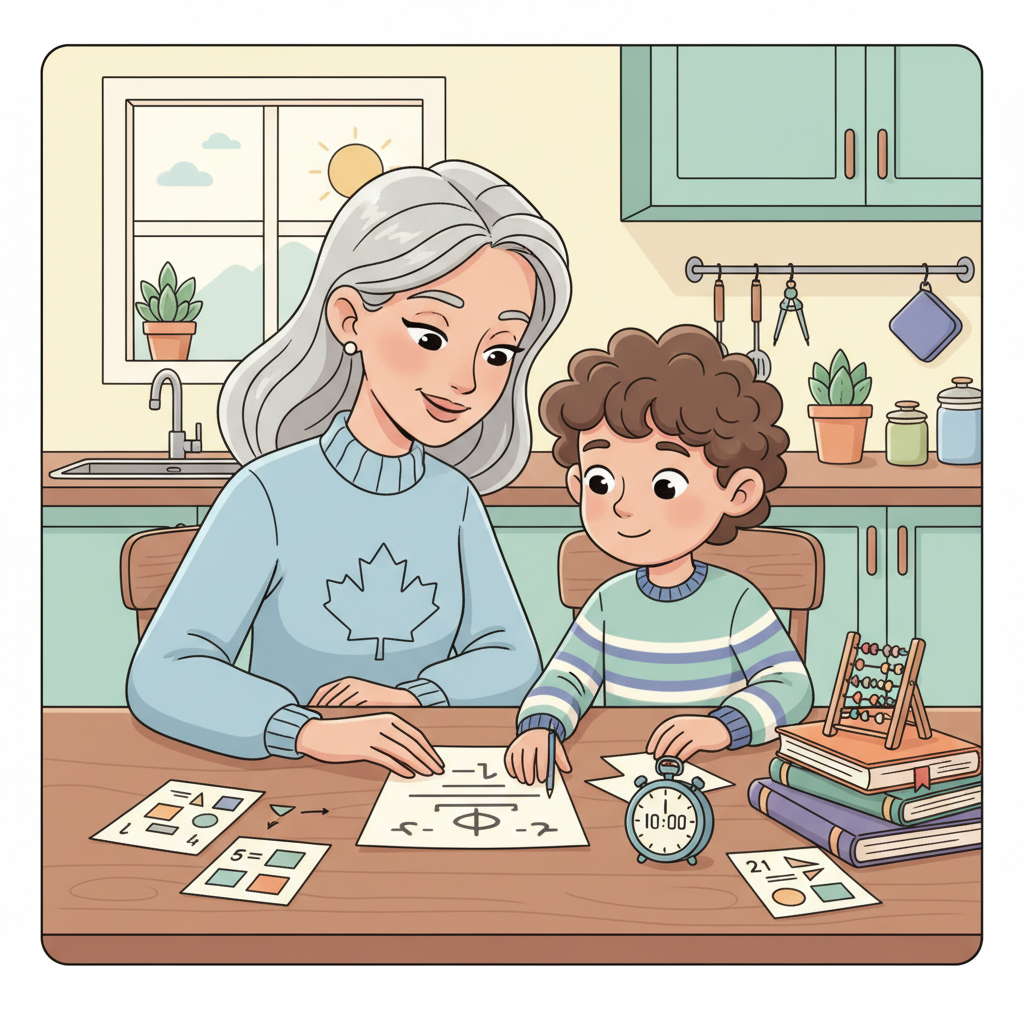
Middle school is where things get genuinely harder, and where many parents are surprised by how quickly the academic landscape changes. The shift from one class teacher to multiple subject teachers is only part of it. The content itself becomes more abstract, the workload increases, and the social dynamics of adolescence arrive at exactly the same time as the academic demands intensify.
This is also, statistically, the stage where the most significant learning gaps in mathematics become apparent. Problems that were manageable in Grade 5 and 6 become real obstacles in Grade 7 and 8 when algebra arrives.
What changes academically in middle school
Students move between classrooms and teachers for different subjects. Each teacher has their own expectations, communication style, and assessment approach. Students are expected to track multiple deadlines, manage their own organisation, and take more responsibility for identifying when they need help.
Academically, subjects become more specialised. Mathematics shifts from arithmetic and number sense toward algebra, proportional reasoning, and increasingly abstract problem-solving. Science becomes more conceptual. Humanities require more analytical writing.
The pace also increases. In elementary school, there is generally time to revisit and consolidate concepts before moving on. In middle school, the curriculum moves faster and assumes that foundational concepts have been mastered. Students who have gaps in their elementary foundations find this particularly difficult because the curriculum does not typically loop back to address them.
Why middle school is a critical checkpoint for math in the Canadian school system
Grade 7 and 8 mathematics in Canada introduces algebra in a way that is genuinely different from anything that came before. Variables, equations, and expressions require a kind of abstract thinking that is a step change from concrete arithmetic, and students who find this jump difficult often struggle to articulate why because the problem is not effort or intelligence — it is a gap in the conceptual foundation.
The most common early warning sign is difficulty with fractions. A student who is shaky on fraction operations in Grade 6 will almost certainly find algebraic fractions in Grade 8 genuinely confusing. Addressing this in Grade 6 takes a fraction of the time it takes to address it in Grade 8, when the student is also managing multiple new concepts simultaneously.
Middle school is also the point where competition math becomes genuinely exciting for strong students. The AMC 8, open to Grade 8 and below, and the Waterloo Gauss contest, open to Grade 7 and 8, introduce students to problem-solving at a level that goes well beyond the curriculum. Students who prepare for these competitions in Grade 7 and 8 arrive at high school mathematics with problem-solving instincts that give them a measurable advantage.
For more on the AMC, read AMC 8 Math Competition: The Complete Guide for Canadian Students and Parents!
How parents can support the elementary to middle school transition
The most useful thing parents can do before the transition is make sure their child’s elementary foundations are genuinely solid rather than surface-level competent. A child who can produce the right answer with some effort is not the same as a child who understands the concept well enough to apply it in an unfamiliar context.
Talk to your child’s Grade 6 teacher about any areas of concern, particularly in mathematics. Address gaps over the summer before Grade 7 rather than waiting to see how Grade 7 goes. And in the first term of middle school, pay attention to early signals – difficulty with a single unit in math is a much easier problem to address in October than in March.
High school in Canada (Grades 9 to 12)
High school in most Canadian provinces runs from Grade 9 to Grade 12. Quebec is the exception, where high school ends after Grade 11 and is followed by CEGEP before university. For students across the rest of Canada, these four years are the most consequential of the K–12 journey in terms of university admissions and future pathway options.
The structure changes significantly. Students have more choice over their courses, electives allow genuine specialisation, and the gap between students who are ahead of the curriculum and those who are catching up becomes considerably wider.
Academic specialisation and course selection in high school
In Grade 9 and 10, most students take compulsory courses in English, mathematics, science, and Canadian history alongside electives. From Grade 11 onward, course selection becomes a significant decision. Students choosing STEM pathways need to make sure their Grade 9 and 10 math and science results are strong enough to access the Grade 11 and 12 courses that university applications require.
Guidance counsellors play an important role at this stage, but the honest reality is that the decisions made in Grade 9 and 10 course selection have consequences that are not always obvious to fourteen-year-olds. A student who takes the academic rather than applied stream in Grade 9 mathematics and then struggles has limited options. A student who arrives at Grade 9 with strong foundational skills has significantly more flexibility.
How math becomes more demanding in high school
The mathematics curriculum in Canadian high school covers functions, trigonometry, statistics, and in Grade 12 an introduction to calculus and vectors. Each year builds directly on the previous one in a way that is less forgiving than elementary or middle school mathematics.
In Ontario, the Grade 9 EQAO mathematics assessment counts toward the final mark in the course. This is the only provincial standardised test in Canada where the result directly affects a student’s grade, which makes Grade 9 mathematics a more consequential year than it might appear.
For students with university ambitions, particularly those targeting competitive programmes at Waterloo, UofT, or UBC, the expectations are even higher. Engineering and computer science programmes at Waterloo are among the most competitive in the country. Waterloo considers performance in the Euclid mathematics contest as part of its admissions process, and strong performance in the AMC 10 or AMC 12 is recognised as additional evidence of mathematical ability by competitive programmes internationally.
Curious about the AMC? Find out more here at AMC 10 Math Competition: The Complete Guide for Canadian Students and Parents or here at AMC 12 Math Competition: Complete Guide for Canadian Students and Parents!
How parents can support the middle to high school transition
The transition into Grade 9 is smoother for students who arrive with strong Grade 8 foundations than for those who scraped through Grade 8 and hope that Grade 9 will somehow be easier. It will not be. The content is harder, the pace is faster, and the results matter more.
The most useful preparation is to make sure Grade 8 algebra, geometry, and proportional reasoning are genuinely understood before September. Students who are uncertain about any of these areas should address them over the summer. This is not about drilling practice papers – it is about identifying the specific concepts that are shaky and building a clear understanding of them before the new year begins.
Different School Models Across the Canadian School System
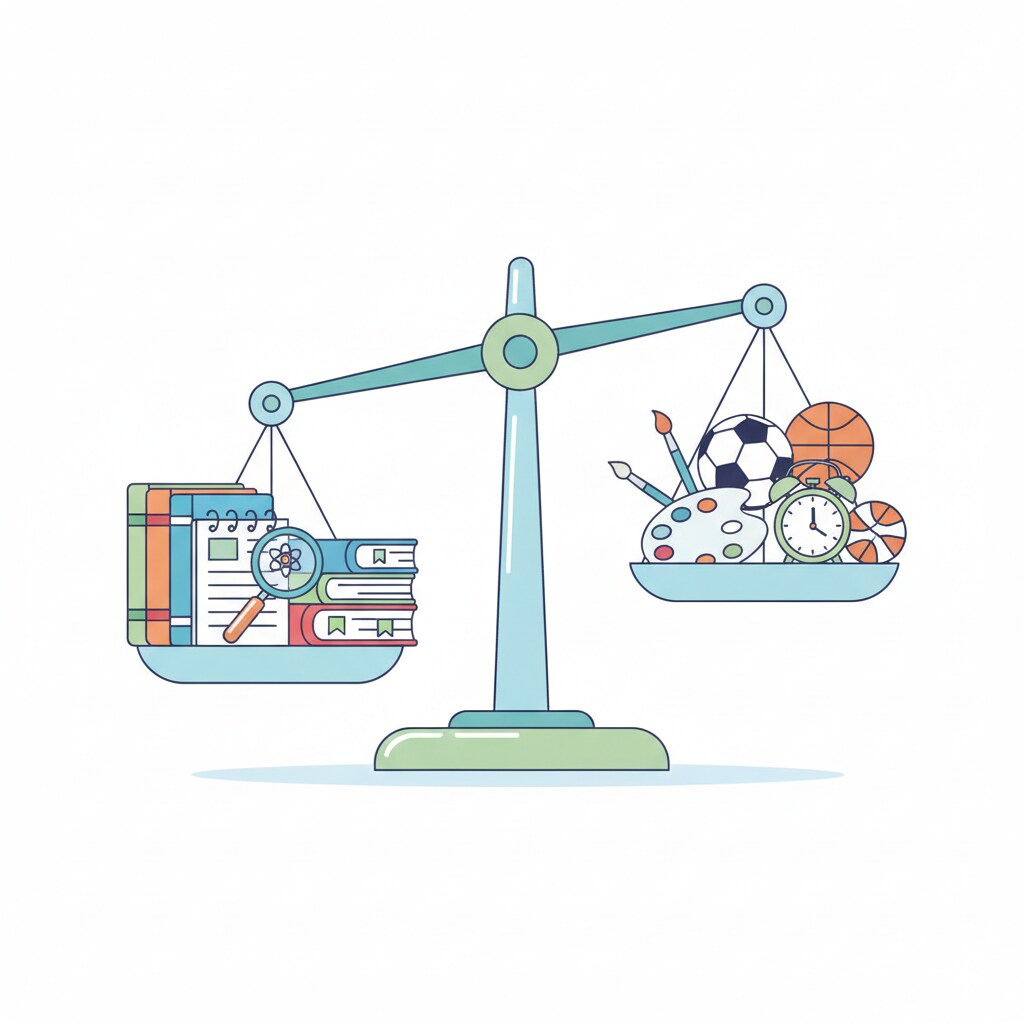
Beyond grade structure, families encounter different types of schools within Canada. Understanding the options helps in making decisions that suit a child’s learning style and goals.
Public schools are funded by provincial governments, follow the provincial curriculum, and are available to all students. Class sizes vary but are generally larger than in private settings. Teaching quality varies between schools and boards.
Private and independent schools charge tuition fees, often have smaller class sizes, and may offer programmes not available in the public system. Some follow provincial curriculum closely. Others, particularly those offering IB or specialised STEM or arts programmes, have a distinct academic culture. Entry is often competitive, particularly for well-regarded schools in the GTA and Metro Vancouver.
French immersion programmes are available within the public system in most provinces and are significantly oversubscribed in urban areas. Registration timelines vary by board: in some Toronto-area boards, parents register in Kindergarten with no guarantee of a place.
IB programmes, available in both public and private settings, offer an internationally recognised curriculum and are valued by universities in Canada and abroad. The IB Diploma Programme in Grades 11 and 12 is particularly rigorous and suits students who are comfortable managing a heavy academic workload.
Alternative and specialised programmes, including STEM-focused, arts-focused, and gifted programmes, exist within most large public boards. In Ontario, gifted identification typically occurs in Grade 3 and involves a multi-stage assessment process.
How to support your child through school transitions
Every transition in the Canadian school system – from elementary to middle school and from middle school to high school – brings new academic expectations, new social dynamics, and new demands on organisation and self-management. The students who handle these transitions best are generally not the ones who are most academically advanced. They are the ones whose foundations are solid and who have developed the habit of asking for help when something is not clear.
Practically, parents can support transitions by:
- Addressing academic gaps before the transition rather than hoping the new school will fix them
- Visiting new schools before September to reduce anxiety about the physical environment
- Maintaining consistent learning routines at home, particularly around homework and reading
- Talking openly about what the new stage involves and what will be different
- Watching for early signs of difficulty in the first term and acting on them quickly
Mathematics is consistently the subject where gaps become most visible at transitions. A student who is genuinely solid in math arrives at each new stage with one less major source of academic stress. A student who is managing rather than understanding arrives at each transition carrying the accumulated weight of concepts that were never fully resolved.
Think Academy’s structured K-12 math curriculum is designed to keep students ahead of these transitions rather than catching up after them. Live interactive classes, teacher-marked homework, and a spiral curriculum that revisits concepts at increasing depth give Canadian students the mathematical foundations they need at every stage.
Frequently Asked Questions
What grade is middle school in Canada?
Middle school in Canada typically covers Grades 7 and 8, though this varies by province. In Alberta and some other provinces, junior high runs from Grade 7 to Grade 9. In some provinces the term middle school is not used at all, with these grades grouped within elementary or junior high school.
What age do children start school in Canada?
Most children start Kindergarten at age 4 or 5, depending on the province. In Ontario, Kindergarten is a two-year programme covering Junior Kindergarten at age 4 and Senior Kindergarten at age 5. In most other provinces, Kindergarten begins at age 5.
How many years is high school in Canada?
High school in Canada generally runs from Grade 9 to Grade 12, covering four years. The exception is Quebec, where high school ends after Grade 11 and is followed by CEGEP before university.
Does the Canadian school system use K-12?
Yes; K-12 refers to Kindergarten through Grade 12, the full span of compulsory education in Canada. Education is managed at the provincial level, which means there are differences in grade groupings, curriculum, and assessment between provinces. The broad developmental stages – elementary, middle, and high school – are consistent even when the specific grades vary.
When does math get harder in Canadian schools?
The most significant jump in math difficulty typically occurs at the Grade 7 to 8 transition, when abstract algebra is introduced for the first time. The second major jump is in Grade 11, when functions, trigonometry, and more advanced algebra become the focus. Students who build strong problem-solving foundations in elementary and middle school handle both transitions more confidently.
What is a gifted programme in Canada?
Gifted programmes are available within most large public school boards and offer enriched or accelerated curriculum for students who have been identified as academically gifted through a formal assessment process. In Ontario, gifted identification typically begins in Grade 3 with the CCAT-7 cognitive assessment. Students who score above the 90th percentile are referred for further assessment, and those who meet the threshold are considered for gifted class placement.