In the era of digital transformation, tools like Google Forms have revolutionized how educators approach research questionnaires and gather actionable insights. Particularly in the K12 educational landscape, Google Forms has emerged as an indispensable resource for simplifying data collection, improving decision-making, and bridging communication gaps between teachers, students, and parents.
Streamlining Research and Feedback with Google Forms
One of the standout features of Google Forms is its ability to streamline the process of creating and distributing research questionnaires. With its intuitive interface, educators can design surveys tailored to their needs, collect responses in real-time, and analyze data efficiently. This eliminates the logistical challenges of traditional paper-based surveys, such as manual data entry and time-consuming analysis.
Additionally, Google Forms offers a variety of question formats, including multiple-choice, short answers, and scales, allowing for versatile and detailed data collection. For example, teachers can use it to assess student engagement, gather feedback on teaching methods, or evaluate the effectiveness of newly implemented programs.

Enhancing Decision-Making in K12 Education
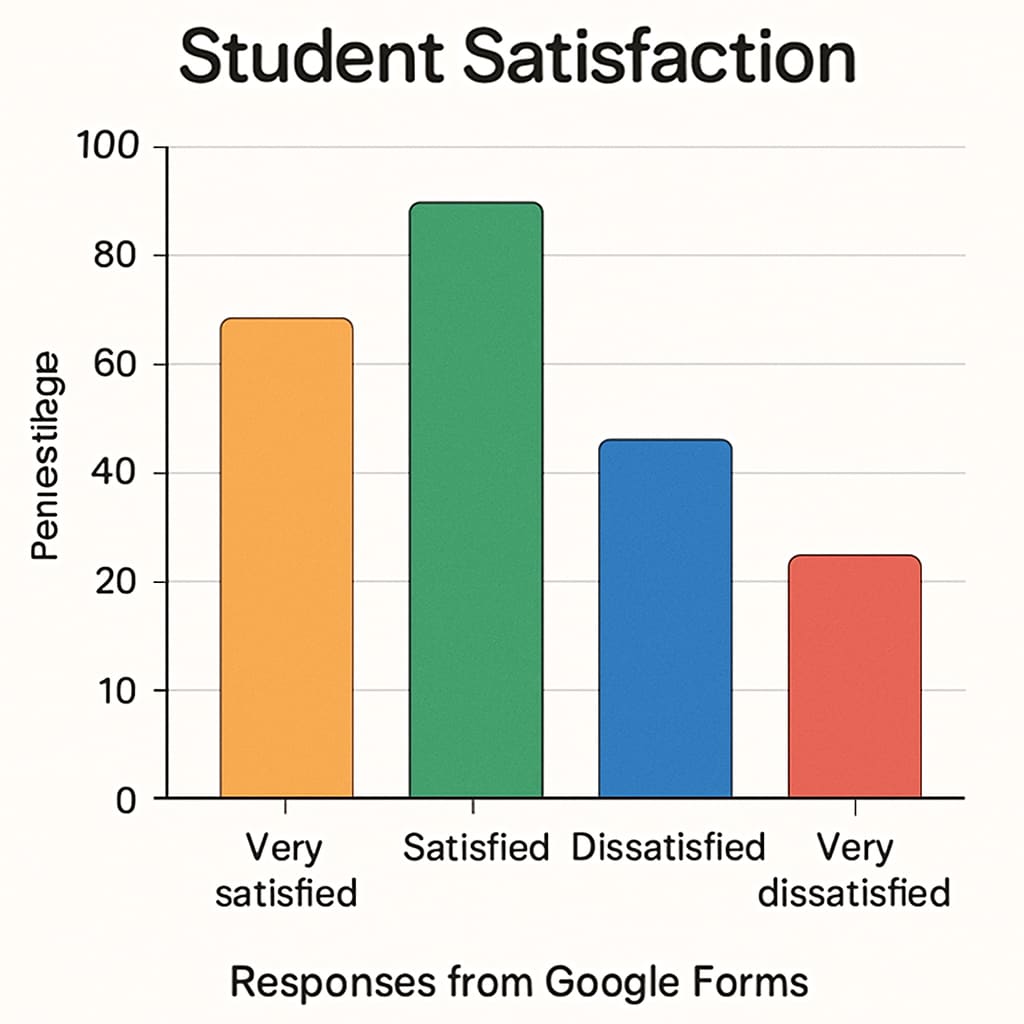
Data-driven decision-making is critical in the K12 educational sector, and Google Forms plays a pivotal role in this process. By providing immediate access to organized datasets, educators can identify trends, pinpoint challenges, and implement informed solutions. For instance, a school might use survey data to determine whether students feel adequately supported in their learning environment or to assess the impact of extracurricular activities.
Moreover, the integration of Google Forms with other Google Workspace tools, such as Google Sheets, allows for seamless data visualization and reporting. This functionality enables educators to present findings to stakeholders, such as school boards or parent committees, in a clear and impactful manner.
Fostering Communication Among Key Stakeholders
Effective communication is the backbone of successful education, and Google Forms serves as a bridge between teachers, students, and parents. For example, teachers can use the platform to conduct parent-teacher surveys, gaining insights into parental expectations and concerns. Similarly, students can provide anonymous feedback on classroom experiences, fostering a culture of openness and collaboration.
In addition, Google Forms can be employed to streamline administrative processes, such as collecting permission slips for field trips or organizing parent-teacher conferences. These applications save time and ensure that all parties remain informed and aligned.
Key Advantages of Using Google Forms in K12 Education
To summarize, below are some of the most notable benefits of using Google Forms in K12 educational research and feedback:
- Ease of Use: A user-friendly interface that requires minimal training to operate.
- Customizability: Options to tailor surveys for specific research objectives.
- Real-Time Insights: Immediate access to responses for faster decision-making.
- Cost-Effectiveness: A free tool that reduces reliance on expensive survey platforms.
- Collaboration: Integration with Google Workspace enhances teamwork and data sharing.
These features make Google Forms an invaluable asset for modern educators striving to create a more effective and inclusive learning environment.
The Future of Educational Research with Google Forms
As educational institutions continue to embrace digital tools, the role of Google Forms in research and feedback is expected to grow. With advancements in artificial intelligence and data analytics, future iterations of the platform may include predictive analytics, automated reporting, and even more robust integrations with other ed-tech solutions. This evolution will further empower educators to make data-driven decisions that enhance student outcomes.
In conclusion, Google Forms is more than just a tool for creating surveys—it is a catalyst for innovation in K12 education. By simplifying research and feedback processes, it enables educators to focus on what truly matters: fostering a supportive and effective learning environment for all.
Readability guidance: The article uses concise paragraphs, clear subheadings, and a balanced mix of text and lists for better readability. Passive voice and long sentences are minimized, and transition words are consistently applied to maintain a logical flow.