


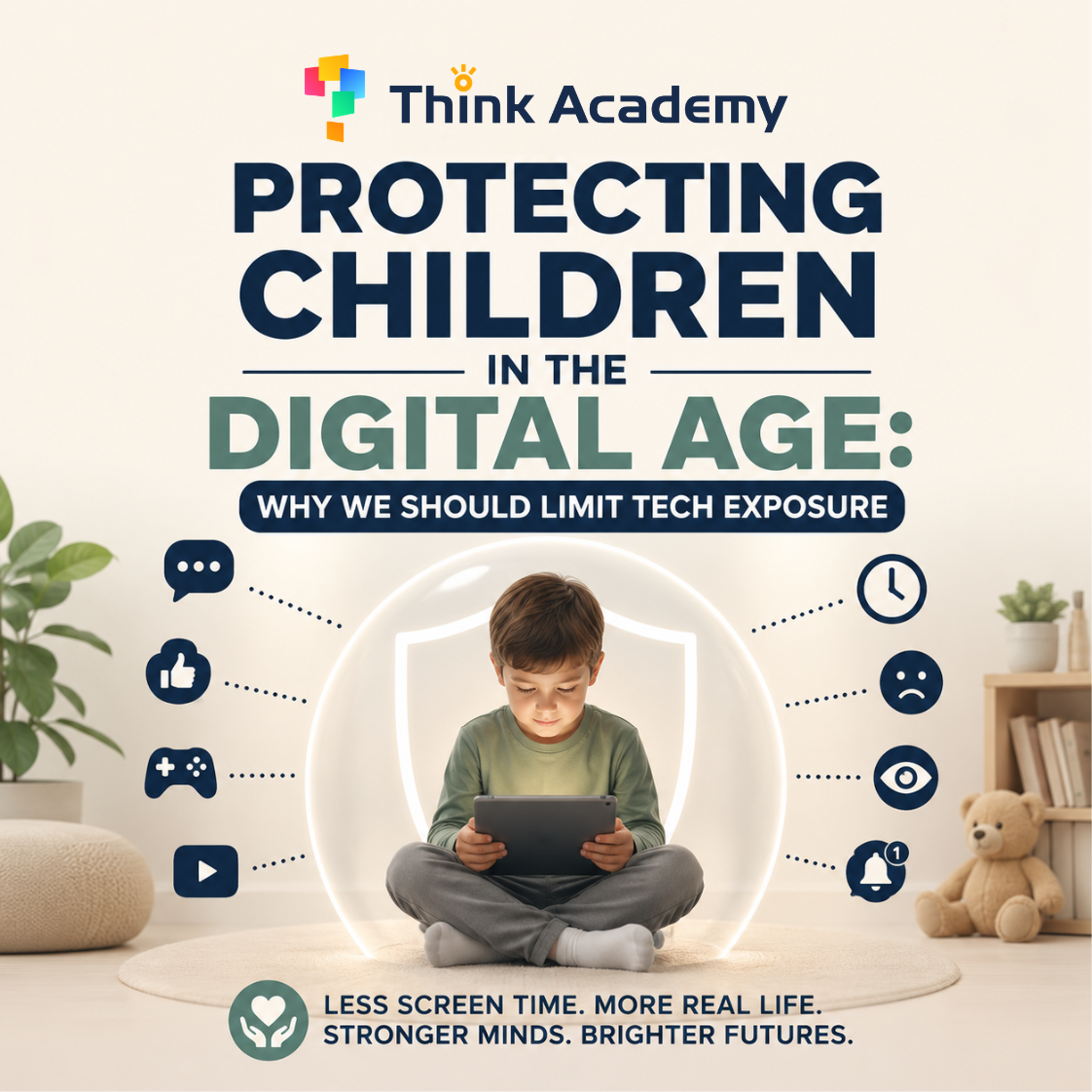
If you’re a parent worrying about how much time your child spends on a screen, you’re not alone — and the worry is well-founded. The American Academy of Pediatrics reports that children aged 8–12 now spend 4–6 hours daily on screens, and teens average 9 hours. But here’s what most articles about screen time and children miss: the total number of hours matters less than what kind of screen time it is. Passive scrolling on TikTok and watching YouTube have very different effects on a developing brain than structured, active educational content. This guide for Canadian parents covers what the research actually says, how to distinguish good screen time from bad, and how to replace passive consumption with something better — without turning every evening into a fight.
How much screen time are children actually getting?
The numbers are striking. According to research from the American Academy of Pediatrics:
- Children aged 8–12 average 4–6 hours of recreational screen time per day
- Teenagers average around 9 hours daily, not counting time spent on schoolwork
- Children under 8 average just over 2 hours daily, with a significant minority well above that
These numbers have been rising steadily for over a decade and accelerated meaningfully during the pandemic. They haven’t come back down. For most Canadian families, the question isn’t “is my child getting too much screen time” — it’s “what kind of screen time, and what do I do about it?”
Why total screen time isn’t the right question
For years, parents and pediatricians focused on a single metric: total hours of screen time per day. But more recent research has shown that this framing misses the most important variable. What the child is doing on the screen matters far more than how long they’re on it.
Passive vs active screen time
Researchers now generally distinguish between two broad categories:
Passive screen time — watching videos, scrolling social media, consuming algorithmic feeds. The brain is largely receptive, dopamine is delivered in short rewarding bursts, and the activity requires no real effort. This is the category most strongly linked to negative outcomes: shorter attention spans, sleep disruption, mood effects, reduced creativity in unstructured play.
Active screen time — interactive learning apps, problem-solving software, structured educational programs, video calls with family, creative tools (digital art, music production, coding). The brain is actively engaged, the activity requires effort, and there’s a clear feedback loop on improvement.
The research consistently shows that these two categories have meaningfully different effects. A child spending 90 minutes on an interactive math program is in a fundamentally different cognitive state than a child spending 90 minutes scrolling short-form video.
What the JAMA Pediatrics research actually shows
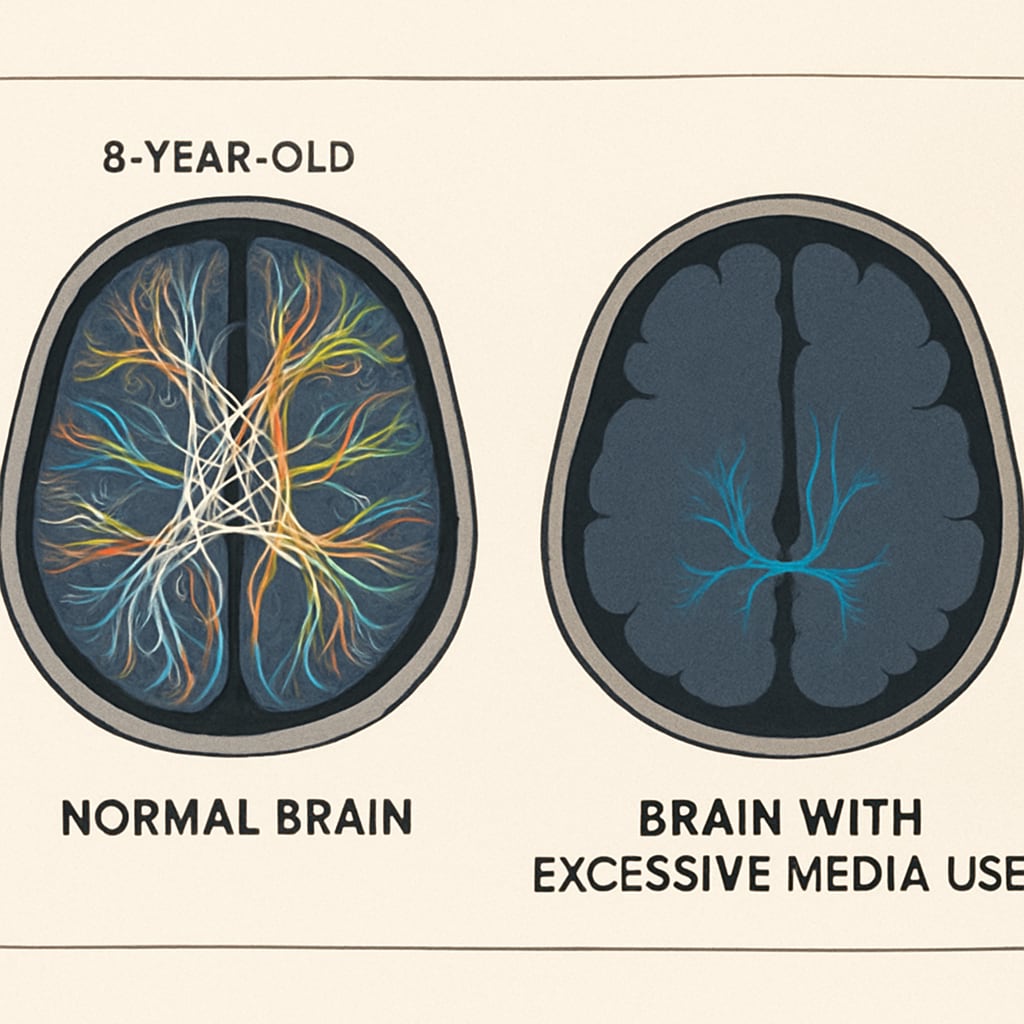
A widely-cited 2019 study published in JAMA Pediatrics found that preschoolers exceeding the AAP’s screen time guidelines showed reduced integrity in brain regions related to language and literacy. Important context that often gets left out of media coverage:
- The strongest effects were associated with passive consumption, not all screen use
- Educational content showed meaningfully smaller effects than entertainment content
- Co-viewing (parent and child watching/using together) reduced negative effects significantly
This nuance matters because it changes what parents should actually do. The take-away isn’t “ban all screens” — it’s “audit what your child is doing on screens, replace passive use with active use, and engage with them on it when possible.”
The effects of passive screen time on developing brains
When we focus specifically on passive consumption — the category that most concerns researchers — the documented effects include:
Cognitive effects
- Attention span reduction. Multiple studies link high passive screen use with shorter sustained attention during offline activities like reading, classroom learning, and unstructured play.
- Sleep disruption. Blue light exposure and the stimulating content itself both interfere with sleep onset and quality, particularly when screen use happens within an hour of bedtime.
- Reduced creativity in unstructured play. Children accustomed to constant stimulation often struggle to engage with open-ended play that requires generating their own ideas.
Emotional and social effects
- Social comparison effects. Particularly for teens, time spent on social media correlates with mood effects, body image concerns, and feelings of inadequacy.
- Reduced face-to-face interaction. Time on screens displaces time spent with family and friends in person.
- Dopamine adaptation. The fast-feedback loops of social media and short-form video can make slower-paced activities (reading, conversation, complex play) feel less rewarding by comparison.
Practical strategies that actually work
The research on what parents can do to manage children’s screen time has converged on a few high-impact strategies. None of these require eliminating screens entirely — which is unrealistic for most families and ignores the genuine educational potential of well-designed digital tools.
Audit before you cut
Before you set new limits, spend a week observing what your child is actually doing on screens. Not the total hours — the content categories. How much is:
- Passive video consumption (YouTube, TikTok, streaming)
- Social media scrolling
- Gaming
- Educational apps or programs
- Creative tools (digital art, music, coding)
- Communication with family and friends
Most parents find the audit eye-opening. Often the issue isn’t total time but the heavy weighting toward one or two passive categories.
Replace, don’t just remove
Cutting passive screen time without replacing it with something engaging creates pushback and rarely lasts. The strategies that work involve substitution:
- Replace 30 minutes of YouTube with 30 minutes of an interactive learning program
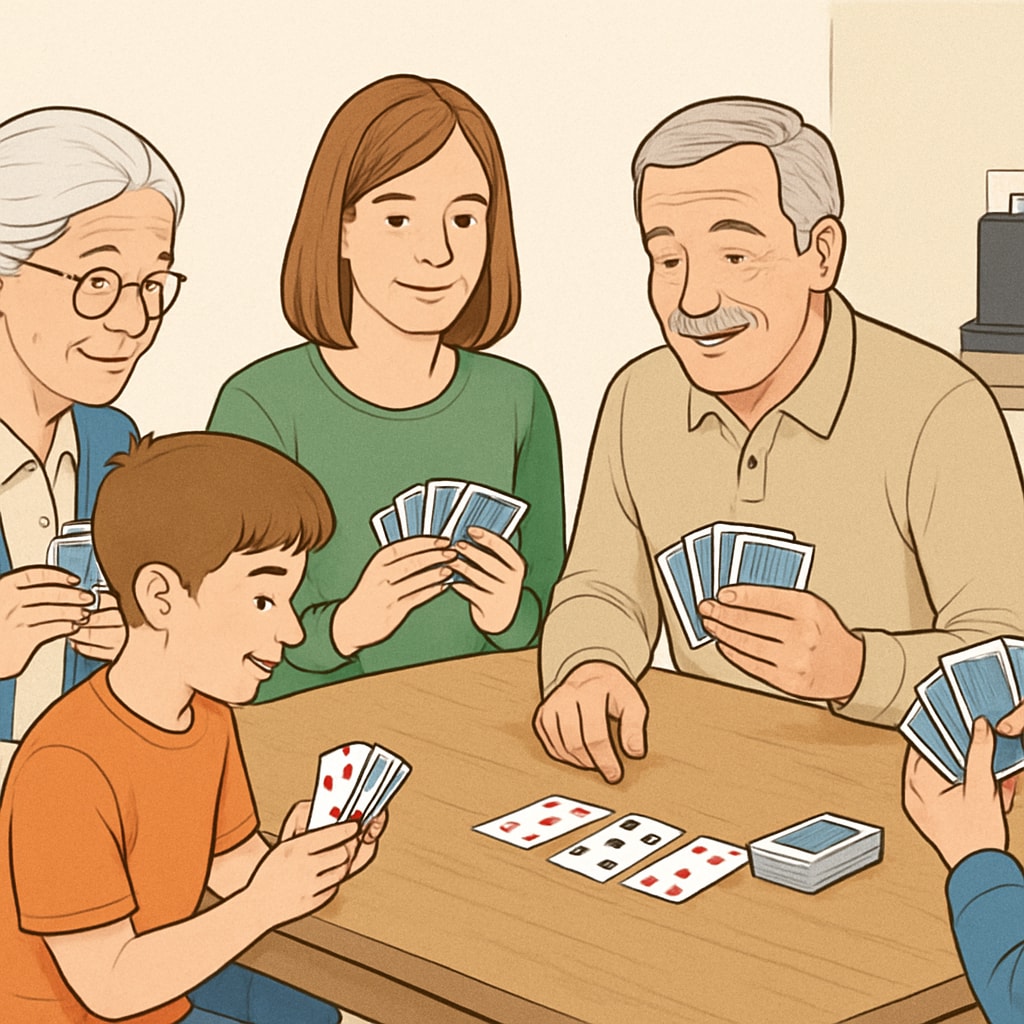
- Replace evening scrolling with a family reading routine
- Replace weekend gaming marathons with a longer block of structured creative time (music lessons, art, cooking, sports)
The goal isn’t less screen use overall — it’s better-quality screen use, and more high-quality offline activity.
Create device-free zones and times
The simplest and best-evidenced strategy:
- Bedrooms. No phones, tablets, or laptops in bedrooms overnight. The single most impactful change for sleep and mood.
- Mealtimes. No devices at the table, for kids or parents.
- The first hour after waking and the hour before bed. Both are linked to mental health outcomes when filled with passive screen use.
Model the behaviour
Children mirror their parents’ screen habits more than any other influence. If parents are on their phones at dinner, during family time, and first thing in the morning, expecting children to behave differently is unrealistic. This is uncomfortable advice but it’s the single highest-leverage thing most parents can change.
Use interactive, high-quality screen time deliberately
Not all screen time is bad — and treating it as such loses an opportunity. Structured, interactive educational content can be a meaningfully positive use of screen time. The kinds of educational use that researchers and pediatricians generally support:
- Interactive learning programs with active engagement (not passive video lessons)
- Programs that include feedback and progression rather than endless content
- Time-bounded sessions with clear start and end points
- Content matched to the child’s actual ability level, not too easy or frustratingly hard
This is genuinely where structured educational programs differ from generic “screen time.” A child working through a math program with active problem-solving, feedback, and visible progress is in a completely different cognitive state than the same child watching an auto-playing video.
Practical Strategies for Balanced Digital Exposure
Parents and educators can implement these research-backed approaches:
- Create tech-free zones: Designate meal areas and bedrooms as device-free spaces
- Schedule analog time: Ensure 2+ hours daily of unstructured play using physical objects
- Model behavior: Children mirror adult screen habits – practice mindful usage
As technology becomes more embedded in education, protecting children’s mental health requires conscious effort to maintain balance. Small, consistent changes yield significant developmental benefits.
How structured learning compares to passive screen time
| Aspect | Passive screen time | Active educational screen time |
|---|---|---|
| Cognitive engagement | Receptive, low effort | Active problem-solving |
| Feedback | None | Immediate, structured |
| Time-boundedness | Often endless | Defined sessions |
| Skill development | Minimal | Measurable progress |
| Dopamine pattern | Short, frequent rewards | Effort-based rewards |
| Sleep impact | Significant if close to bedtime | Lower, especially earlier in day |
| Long-term outcomes | Linked to negative effects | Linked to positive effects |
The distinction matters because it gives parents a concrete framework for making decisions, rather than a vague sense that all screens are bad.
How Think Academy Canada fits into this conversation
Think Academy is the international arm of TAL Education Group, one of the largest education companies in the world. Our Canadian programs are built around interactive math learning that’s deliberately designed as active screen time, not passive.
For parents thinking carefully about screen time:
Our sessions are time-bounded. Students log in for structured class time, complete focused homework, and log off. There’s no endless content feed or auto-play.
Our platform is built around active problem-solving. Students work through problems, get feedback, and see visible progress — exactly the kind of engagement researchers distinguish from passive consumption.
Our teachers mark every homework set personally. The feedback loop is real and human, not algorithmically generated.
Our free math assessment is a 20-minute interactive diagnostic that gives you a detailed feedback report on your child’s strengths and gaps, plus free practice resources. It’s also a chance to see, for free, what active educational screen time actually looks like — without commitment or sales pressure.

Frequently asked questions
How much screen time is too much for children?
The American Academy of Pediatrics suggests under 1 hour daily for ages 2–5, and consistent limits for older children with attention to what is being viewed rather than just how much. But total hours is increasingly seen as the wrong metric — passive vs active use matters more.
What’s the difference between active and passive screen time?
Passive screen time is consumption (watching videos, scrolling feeds) where the child is largely receptive. Active screen time involves engagement, problem-solving, or creation — interactive educational apps, video calls, creative tools, coding. The two categories have meaningfully different effects on development.
Is all screen time bad for children?
No. Research distinguishes between passive consumption (which carries documented risks) and active engagement (which can be neutral or beneficial). Co-viewing with parents, structured educational content, and creative tools are generally treated differently than passive entertainment.
Does educational screen time count toward total screen time?
It does in the strictest accounting, but most pediatricians now treat structured educational use differently from passive consumption when advising parents. Time spent on a math program with active problem-solving isn’t equivalent to time spent scrolling.
How do I get my child to use less passive screen time?
Substitute rather than just remove. Replace YouTube or scrolling with a structured alternative — reading, sports, structured learning, creative play. Cutting screens without substitution rarely lasts and creates pushback.
What’s the most important screen time rule?
If you can only enforce one: no devices in the bedroom overnight. This has the strongest evidence behind it of any single intervention, and protects sleep, mood, and academic performance.
How does screen time affect children’s learning?
Heavy passive screen use is linked to shorter attention spans, reduced creativity, and disrupted sleep — all of which affect classroom learning. Active educational screen use, by contrast, can directly support learning when it’s well-designed.
Should I ban screens completely?
No, and it’s generally counterproductive. The goal is healthy balance and quality differentiation, not elimination. Banning all screens creates pushback, ignores legitimate educational opportunities, and doesn’t prepare children for a world they’ll have to navigate as adults.
About Think Academy Canada
Think Academy Canada, part of TAL Education Group, supports K–12 students with structured math programs built around an online interactive platform, teachers who personally mark every homework set, and time-bounded sessions designed as active learning, not passive consumption.
🟦 Follow us on Instagram @thinkacademyca for math tips, parenting resources, and free practice materials.

