


Ontario curriculum changes can feel confusing, especially when you are trying to support a child aged 4–12 while news headlines sound urgent. However, many updates are gradual and show up first in official curriculum documents, not social media summaries. This guide helps you verify what is actually changing, understand what it means at home, and choose practical next steps for your child’s learning.
How Ontario curriculum updates actually happen
In Ontario, curriculum expectations are published and maintained by the provincial government. Therefore, the most reliable starting point is always the official curriculum page from the Ontario Ministry of Education and the province’s Ontario curriculum hub. These pages point you to current documents and related guidance.
When an update occurs, you may see a revised curriculum document, implementation guidance, or supporting resources. However, the pace of classroom change can vary, because boards and schools may schedule professional learning and resource updates over time. If a document does not clearly state an effective date or version, treat any timeline as uncertain and keep checking the official hub.
It also helps to know what “curriculum expectations” means. Expectations are the specific skills and knowledge students should demonstrate by the end of a grade (for example, “compare fractions” or “write a short opinion piece”). Therefore, curriculum changes matter most when they shift what is taught, when it is taught, or how progress is described.
Where parents can verify Ontario curriculum changes quickly
Before adjusting tutoring, buying workbooks, or worrying about gaps, confirm the information using official or reputable sources. Start with Ontario’s curriculum hub, then cross-check with a trusted public explainer if needed. For example, the EQAO site is useful because it explains provincial assessment and publishes reports that reflect system-wide learning trends.
For broader context on how curriculum works, you can also use a neutral reference source such as Encyclopaedia Britannica to look up key education terms (for example, “curriculum” or “assessment”). In addition, Wikipedia can be helpful for quick definitions, but it should not be your only source for policy details.

When you read a curriculum document, look for these verification clues:
- A clear title and subject (for example, Mathematics, Language)
- Publication or revision information (version notes, if provided)
- Grade-by-grade expectations and examples
- Links that stay within official Ontario government domains
What curriculum updates can change for children ages 4–12
For most families, the impact shows up in everyday learning routines. For example, a child might bring home different types of math problems, spend more time explaining their thinking, or use new vocabulary in language tasks. However, even when expectations shift, foundational skills still matter: number sense, reading comprehension, and clear communication remain central.
Here are common areas that curriculum updates may affect:
- Scope and sequence (the order topics appear across grades)
- Emphasis on skills (for example, more problem solving or more foundational practice)
- Assessment language (how progress is described)
- Classroom materials (new digital tools or refreshed textbooks)
If you want a dependable snapshot of how Ontario describes math learning today, Ontario’s official curriculum hub is the best source. For additional math-specific context, you can compare with national and international learning perspectives from reputable organizations, such as the OECD PISA program (which assesses 15-year-olds internationally). While PISA is for older students, it can explain why systems often emphasize reasoning and real-world application.
Math in elementary grades: what to watch for at home
Even when policy language changes, your child’s day-to-day math needs stay fairly consistent. Therefore, rather than chasing every update, watch for whether your child can explain ideas clearly and use strategies flexibly. For example, being able to estimate an answer, check work, and explain “why” matters as much as speed.
Use this simple home check-in by grade band:
| Age/Grade band | Signs learning is on track | If your child struggles, try this next |
|---|---|---|
| Primary (about JK–Grade 2) | Counts accurately, recognizes patterns, explains simple strategies | Use everyday math: counting items, simple games, number talks (short discussions about how to solve) |
| Junior (about Grades 3–6) | Understands place value, uses multiplication facts, explains steps | Practise facts in short bursts, then apply them in word problems with drawings |
If you want competition-style enrichment without pressure, Canada has reputable math contests and problem banks that can build reasoning. For example, the University of Waterloo’s Centre for Education in Mathematics and Computing (CEMC) publishes free resources and contest information. Similarly, the Math Kangaroo Canada site explains its contest format for younger learners.
Reading and writing: small shifts you may notice
Parents often notice literacy changes through homework tasks. For example, children may be asked to justify opinions with evidence, summarize nonfiction, or discuss the author’s purpose (the reason an author wrote a text). However, the best support at home still looks familiar: daily reading, talking about what you read, and writing short, meaningful pieces.
Try these low-stress prompts at dinner or bedtime:
- “What was one new word you learned today, and what does it mean?”
- “What was the most important part of what you read? How do you know?”
- “If you could change one part of the story, what would you change, and why?”
A parent’s checklist for responding calmly and effectively
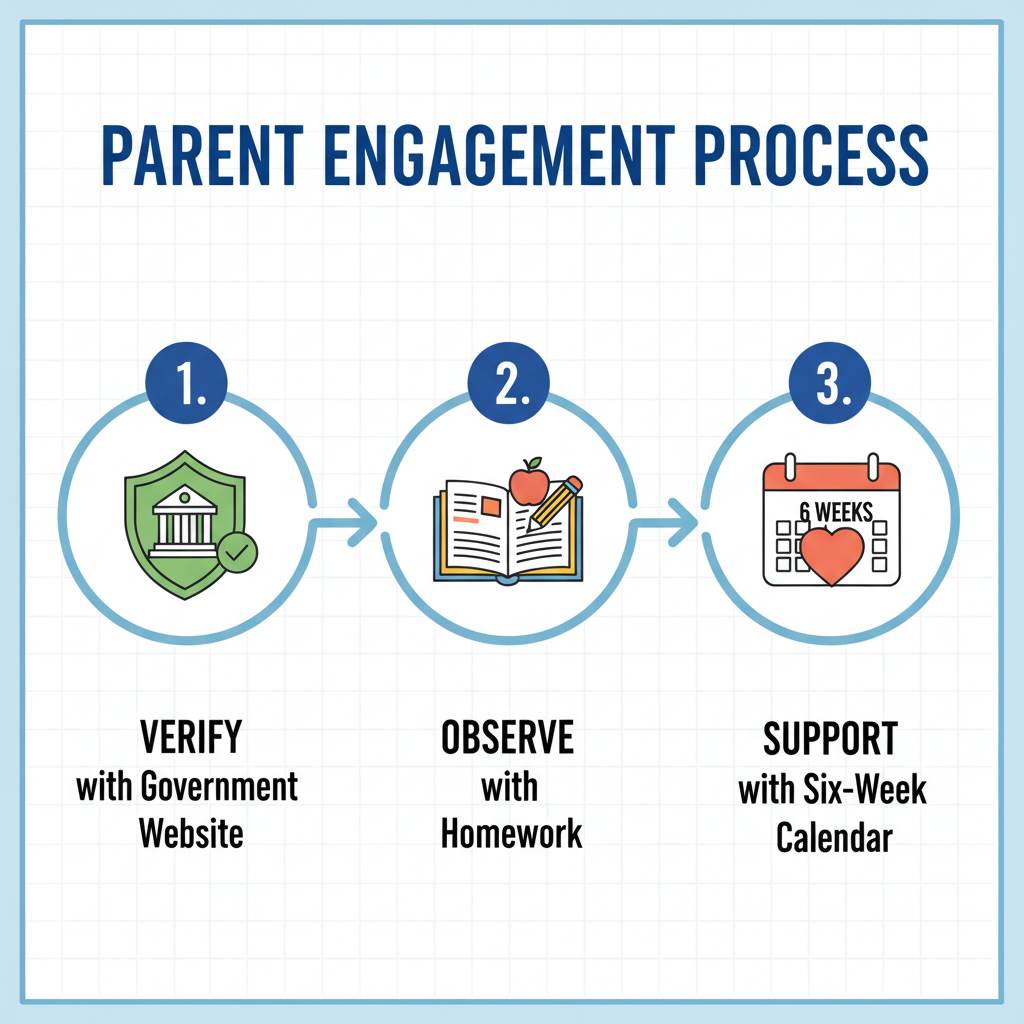
When you hear about an update, it helps to respond in steps instead of reacting emotionally. Therefore, focus on what you can confirm and what your child is actually experiencing. In many cases, a child’s classroom routine changes slowly, even when a document changes quickly.
- Check the official Ontario curriculum hub for the current document.
- Scan the grade expectations for your child’s grade and the grade before it.
- Ask your child what feels different this month (not what they think “the curriculum” is).
- Collect 2–3 recent samples: a math page, a writing piece, and a reading log.
- Pick one skill to strengthen for six weeks (for example, math facts or reading stamina).
If you want a neutral, evidence-based view on education debates, Canadian outlets sometimes publish research-informed explainers. For example, CBC News Education covers education stories, and The Conversation Canada often includes articles written by academics (researchers who work at universities).
Tools & resources parents can use (official sites)
Good tools make it easier to support skills without guessing. However, choose tools that align with your child’s age and keep sessions short and consistent.
- Ontario Curriculum (official hub) for the most accurate expectations
- EQAO for provincial assessment information and public reports
- University of Waterloo CEMC for free math problems and enrichment
- Khan Academy for structured practice and short instructional videos
- Government of Canada guidance on screen time to help balance digital practice with rest and play
Sources and trustworthy places to track updates
These sources help you confirm what is official and what is commentary:
- Ontario Ministry of Education: Ontario Curriculum hub
- EQAO: assessment information and public reports
- CBC News: Education
- The Conversation Canada: research-informed education articles
- University of Waterloo CEMC: math enrichment resources
Concluding
Ontario curriculum changes matter most when they affect what your child practises every week and how skills build across grades. Therefore, focus on verified documents, observe your child’s actual work, and choose one or two practical supports you can maintain. If you stay steady and evidence-based, you can turn uncertainty into a clear, calm learning plan.
About Think Academy
Think Academy, part of TAL Education Group, helps K–12 students succeed in school today by building strong math foundations and critical thinking skills. At the same time, we focus on the bigger picture—developing learning ability, curiosity, and healthy study habits that inspire a lifelong love of learning. With expert teachers, proven methods, and innovative AI tools, we support every child’s journey from classroom confidence to long-term growth.

