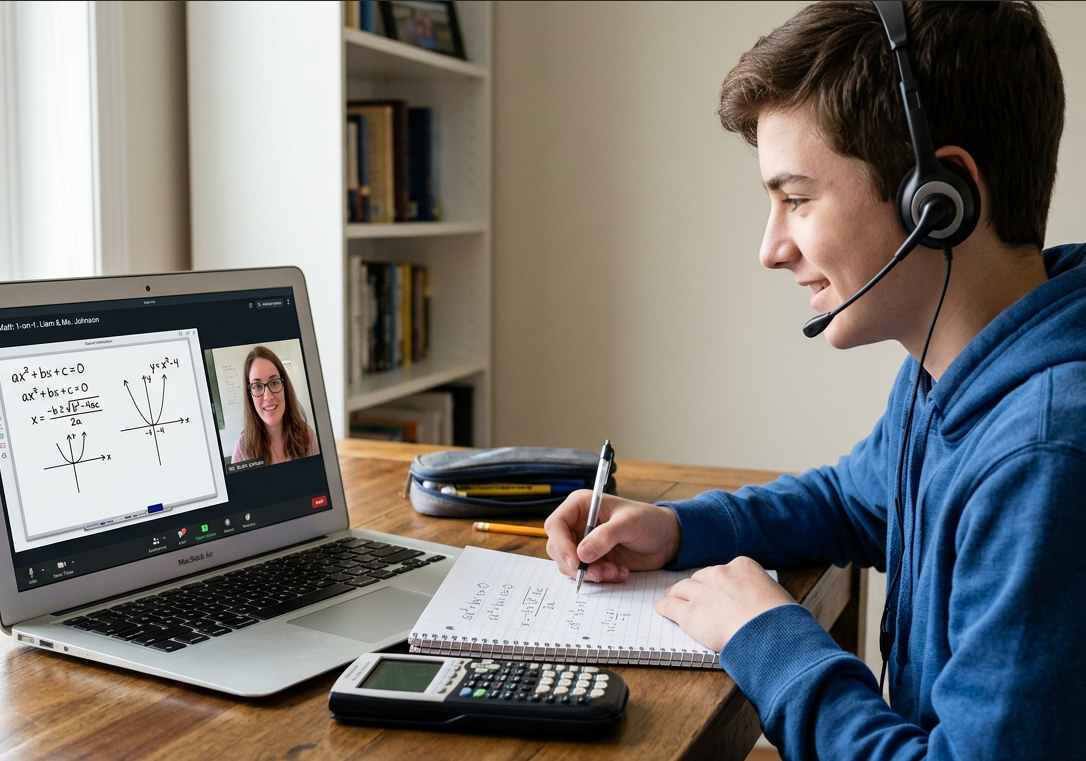
More parents are turning to 1-on-1 online math tutoring because they offer something traditional large-group learning mode often cannot.
While one-on-one tutoring improves student’s individual proficiency level, group learning typically forces all children to follow a standardized schedule.
The best tutoring is not just about explaining homework problems. It helps students understand how math works, build stronger thinking skills, and develop long-lasting math confidence.
So what should parents look for when choosing a high-quality 1-on-1 online math class? Here are the key qualities that make the biggest difference.
1. Personalized Math Tutoring That Fits Every Student
One of the biggest advantages of 1-on-1 math tutoring is that the lesson does not have to follow a fixed template. Every student comes with a different grade level, math foundation, learning pace, and learning goal.
A good teacher should first understand where the student is now, then create a learning plan that matches what the student actually needs.
2. A Teacher Who Explains the ‘Why,’ Not Just the Answer
Top-tier online math tutors are capable of much more than solving problems correctly. They deliver clear, logical mathematical explanations aligned with students’ grade bands, skill levels, and learning targets.
By breaking concepts down into straightforward, easy-to-grasp components, they help students follow the reasoning linking each successive step.
Experienced teachers often prompt students with guiding questions. Such as “Walk me through your reasoning” or “What would result if we alter this value?” This encourages learners to verbalize their thought process.
3. Interactive Lessons That Keep Students Engaged
Many parents worry that students may lose focus during online lessons. That is why a strong interactive online math class should never feel like a one-way lecture. Students need to participate, think aloud, answer questions, and work through problems with the tutor in real time.
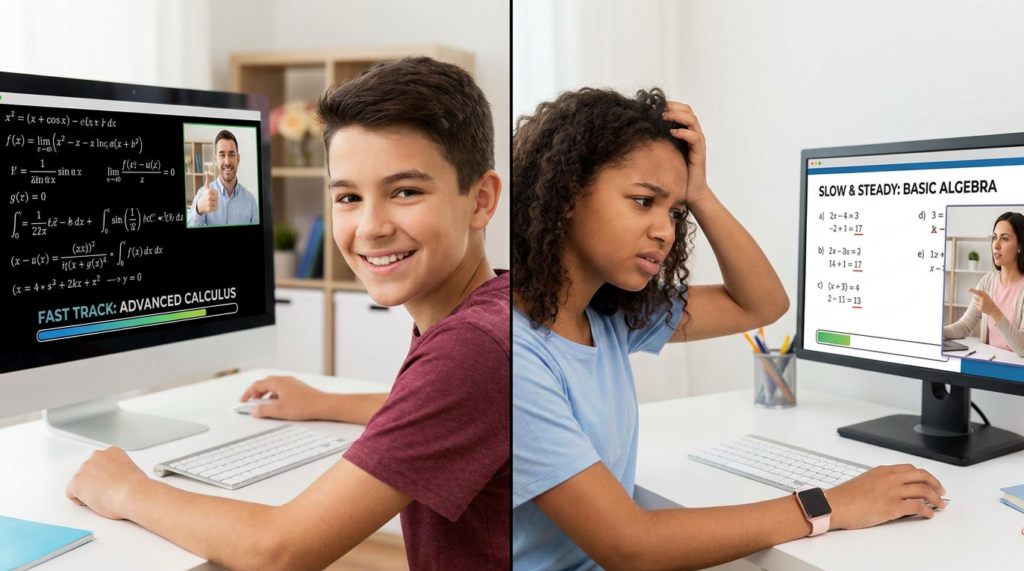
Interactive tools can make a major difference:
Live questioning, digital whiteboards, step-by-step problem solving, instant practice feedback and self-operable functions including answer selection and photo uploads keep students engaged throughout the lesson.
Instead of watching the tutor solve every problem, students should be guided to try, explain, correct, and improve to make progress.
4. Real-Time Feedback and Progress Tracking
Effective online math tutoring should provide feedback during and after the lesson.
When a student makes a mistake, the tutor should correct it in real time and help the student understand why the mistake happened. This prevents small misunderstandings from becoming long-term learning gaps.
After class, parents should also have a clear sense of what was covered. Parents need to be aware of the students’ strengths, common mistakes, and areas that require further review.
5. A Lesson That Builds Real Math Confidence
Many parents search for math tutoring for kids because their child feels anxious or afraid of making mistakes in math.
In a supportive 1-on-1 online math class, students can ask questions more freely and work through challenges at their own pace. A good teacher gives timely feedback, and helps students see mistakes as part of the learning process rather than a sign of failure.
Over time, students who feel safe to make mistakes during one-on-one lessons will ask more questions and develop a genuine positive connection with math.
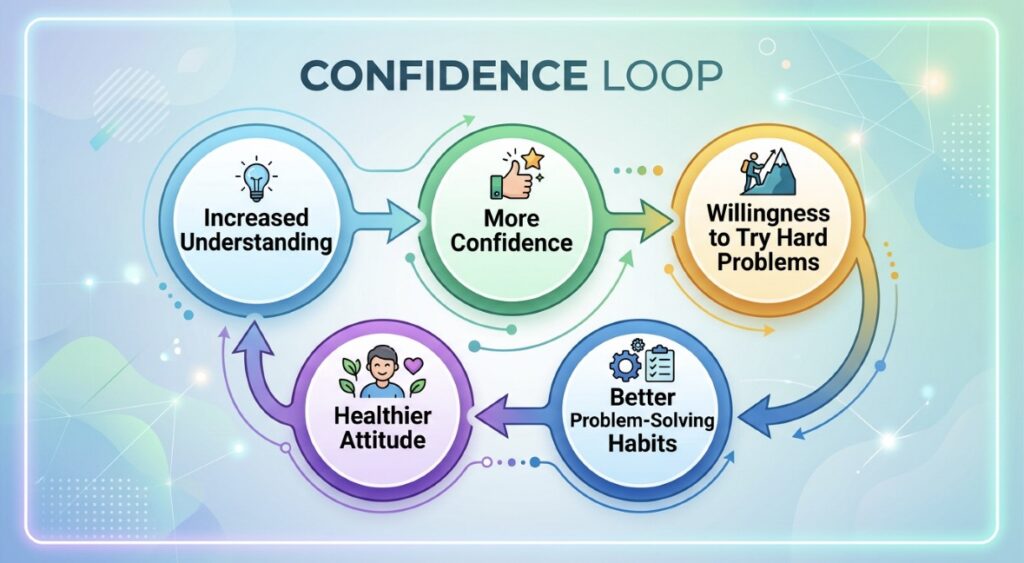
This creates a positive confidence loop: as students understand more, they become more willing to try difficult problems.
How Think Academy 1-on-1 Math Tutoring Supports Students
Think Academy 1-on-1 Math Tutoring provides personalized online math support for students who need to catch up, stay on track, or move ahead.
Before the first lesson begins, Think Academy 1-on-1 helps identify exactly where your child is. Then, student will receive a customized learning plan based on their current level, school curriculum, and long-term goals.
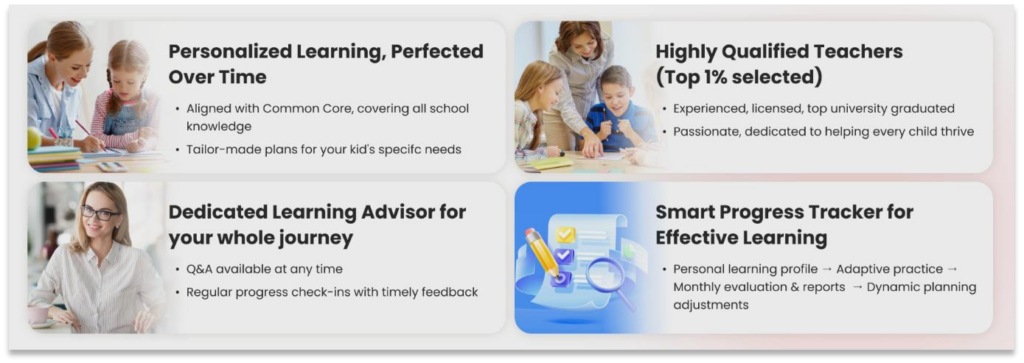
With 1-on-1 instruction, students get targeted explanations, real-time feedback, and guided problem-solving practice. Families also receive support from a dedicated learning advisor and progress tracking.
We believe that every child deserves a math class where they feel seen, heard, and supported.
Need Help with Math?
Feedback from our users

「In the 1-on-1 lessons, the teacher was able to slow down, explain each step clearly, and identify where the confusion started. After a few weeks, my son became more willing to talk through problems.」
Lizzy
San Diego, California

「We were looking for math tutoring that could do more. Think Academy 1-on-1 helped me understand our child’s current level and created a plan that balanced school math support with more challenging problem-solving practice.」
Carol
Richmond, Virginia
Frequently Asked Questions
Q1: What grade levels are best suited for a 1-on-1 online math class?
A 1-on-1 online math class can work well for elementary, middle school, and high school students, but it is especially helpful when students begin facing more abstract math concepts. For many families, this often happens around pre-algebra, algebra, geometry, or advanced math preparation.
Q2: How often should my child take 1-on-1 online math tutoring?
The right frequency depends on your child’s current level, schedule, and learning goals. Some students may benefit from one session per week for steady support, while others may need more frequent lessons when preparing for tests, catching up, or working toward an advanced math track.
Q3: Does my child need to prepare anything before an online math tutoring session?
It helps if students bring recent homework, test results, notes, or questions from school. These materials allow the online math tutor to understand what the student is currently learning and where they may be struggling. If there is no specific schoolwork to review, the tutor can still use the session to assess skills, explain key concepts, and guide practice.
Q4: What device does my child need for a 1-on-1 online math class?
Most students need a stable internet connection, a computer or tablet, and a quiet learning space. A device with a larger screen is often better for viewing math problems, diagrams, and an interactive whiteboard.
Q5: Should parents sit with their child during the online math class?
Usually, parents do not need to sit through the entire class, especially for older students. However, younger students may need some help at the beginning with logging in, using tools, or staying focused.
Q6: Can 1-on-1 online math tutoring help students who are already doing well in math?
Yes. Online math tutoring is not only for students who are falling behind. Students who already perform well can use 1-on-1 lessons to move ahead, explore more challenging topics, strengthen problem-solving strategies, or prepare for advanced classes and competitions. In this case, the goal is not remediation, but enrichment and long-term growth.