


If you are researching boarding schools in Canada, you may feel pulled in two directions at once. You want strong academics and a caring community, however you also worry about homesickness, daily supervision, and whether your child will truly thrive away from home. This parent guide explains how boarding schools work in Canada, what to verify (not just what sounds good), and how to compare schools with clear next steps.
What parents are really deciding when they consider boarding schools
For families of children ages 4–12, “boarding” is usually less about prestige and more about fit. For example, some parents need predictable weekday routines due to work travel, while others want a structured environment with small classes and supervised study time.
However, boarding is not one single model. Some schools board only in later grades, while others accept younger students in limited numbers, so you should confirm the school’s entry points and age-range policies directly.
boarding schools in Canada: how the system is organized
Most boarding schools are independent (private) schools. In Canada, education is governed provincially, so basic rules and oversight differ by province. Therefore, it helps to start by checking the province’s independent school information and then confirming the school’s specific accreditation or membership.
In Ontario, for example, private schools are listed by the Ministry of Education, and some may be inspected depending on the program they offer. You can verify school status through the Ontario Ministry of Education private schools information hub.
Many well-known boarding schools also belong to associations that publish standards and member lists. For example, you can explore Canadian independent school communities through the Canadian Accredited Independent Schools (CAIS) directory and learn about broader independent-school information via the Conference of Independent Schools of Ontario (CIS Ontario).
Boarding vs day school: what changes in your child’s daily life
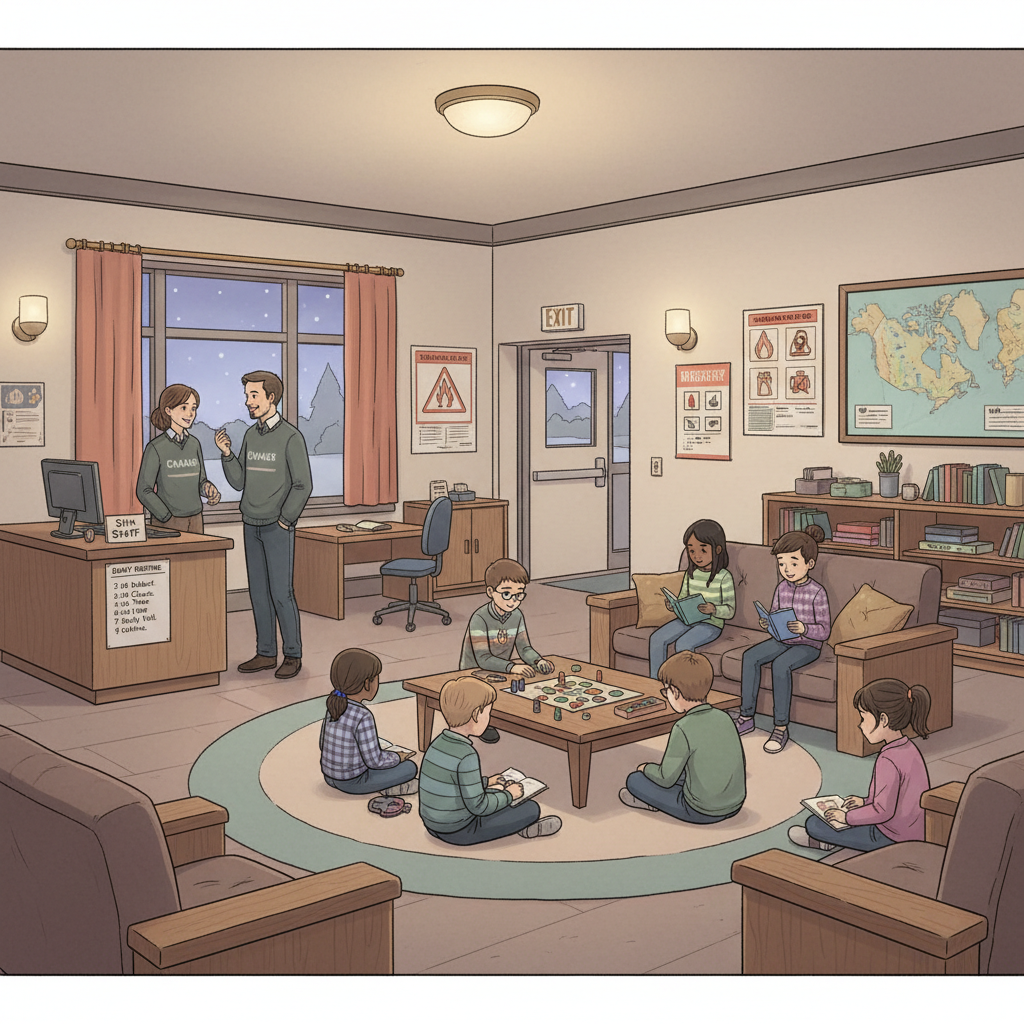
On paper, a school can look excellent, yet the boarding routine may be the real make-or-break factor for younger children. Therefore, focus on lived details: mornings, meals, homework time, downtime, and bedtime.
Ask for a sample weekly schedule for boarders at your child’s age. Then compare it to what you know helps your child regulate emotions, energy, and focus.
- Supervision: Who is with children before school, after school, and at night?
- Evening routine: Is there quiet reading time, structured homework time, and lights-out consistency?
- Communication: How often can children call home, and how is screen time handled?
- Weekends: Do most children stay on campus, go home, or join planned activities?
What to verify about safety, health, and supervision
Safety is not a single promise; it is a system. For example, strong schools can explain how they manage sign-in/sign-out, campus access, allergies, medication storage, and nighttime supervision.
Because policies vary by school, ask for written copies of key handbooks. Also ask who leads the residence program (sometimes called “boarding life” or “residential life”) and what training staff receive.
| Area to verify | What to ask | What a clear answer sounds like |
|---|---|---|
| Night supervision | Who is on duty overnight, and where are they located? | Named roles, on-call rotation, and where staff sleep in relation to students |
| Illness management | What happens if my child gets sick overnight? | Step-by-step process, who calls parents, and local health-care access plan |
| Allergies | How are food allergies handled in dining and residence? | Documented protocols, staff training, and meal accommodations process |
| Belongings and privacy | How do you manage room checks and storage? | Clear policy that balances safety checks and student dignity |
If you are unsure what questions are standard, Canada’s Health Canada food allergy information can help you understand common risk points and the kinds of routines that reduce them.
Academics: what “strong program” means for ages 4–12
For younger children, academic strength often shows up as consistent fundamentals, not constant acceleration. Therefore, ask how the school teaches reading, writing, and math day to day, and how teachers check understanding.
In Canada, curriculum expectations are provincial in public systems. Private schools may follow a provincial curriculum, an international framework, or a school-designed program. In Ontario, you can review grade-by-grade expectations through the Ontario curriculum hub to ground your questions in concrete learning goals.
If a school offers an International Baccalaureate Primary Years Programme, ask what it looks like in practice for your child’s age. The International Baccalaureate Organization explains its programmes and philosophy in plain language.
Social and emotional readiness: what to watch for (without labelling)
Children ages 4–12 vary widely in independence. Some manage transitions well, while others need more predictable connection with caregivers. Therefore, focus on observable skills and support structures rather than assumptions.
Ask how the school helps new boarders adjust in the first month. Also ask how they respond when a child misses home, struggles with friendships, or has sleep issues.
- Transition supports: buddy systems, house meetings, and regular check-ins
- Family connection: scheduled calls, family weekends, and communication norms
- Belonging: how mixed ages interact in residence and activities
Costs and contracts: how to compare total price fairly
Boarding costs often include tuition plus residence and meals, however families can still face extra expenses. Therefore, request a full annual cost sheet and confirm what is included.
- Mandatory fees: uniforms, technology, activity fees, transportation
- Optional costs: tutoring, music lessons, sports travel, clubs
- Deposit and refund timelines: when deposits are due and what is refundable
- Break schedules: whether residence stays open during holidays or requires travel
If the school mentions financial assistance, ask how it is awarded and what documents are required. Then confirm deadlines early, because they can arrive before admissions decisions.
Admissions steps: what a typical process looks like
Admissions steps differ, yet many boarding schools use a similar sequence: inquiry, campus tour (or virtual tour), application, interview, and records review. Some also request teacher references and age-appropriate assessments (basic skills checks).
Because timelines can change each year, rely on the school’s admissions page and written communications. Also keep copies of every requirement in one place so nothing gets missed.
Boarding school tour day checklist: questions that reveal day-to-day reality
A polished tour can still hide gaps. Therefore, ask questions that force specifics and examples. If possible, ask to see both classrooms and residence spaces that your child would actually use.
- “Walk me through a typical weekday from wake-up to bedtime for a child this age.”
- “What happens during unstructured time, and who supervises it?”
- “How do you handle homework help without turning evenings into extra school?”
- “If my child is struggling socially, who notices first, and what happens next?”
- “How do you communicate with parents when issues are small but important?”
Tools & resources for parents (official and reputable)
Use these sources to verify claims, understand curriculum language, and stay grounded in facts while you compare schools.
- Government of Canada: study in Canada overview (helpful if your family is navigating study permits)
- Ontario Ministry of Education: private schools information (how private schools are listed in Ontario)
- Ontario curriculum hub (grade expectations you can use for academic questions)
- CAIS (member school directory and standards context)
- Encyclopaedia Britannica: boarding school overview (plain-language background and terminology)
- Wikipedia: boarding school (helpful starting glossary, verify details elsewhere)
Concluding Paragraph
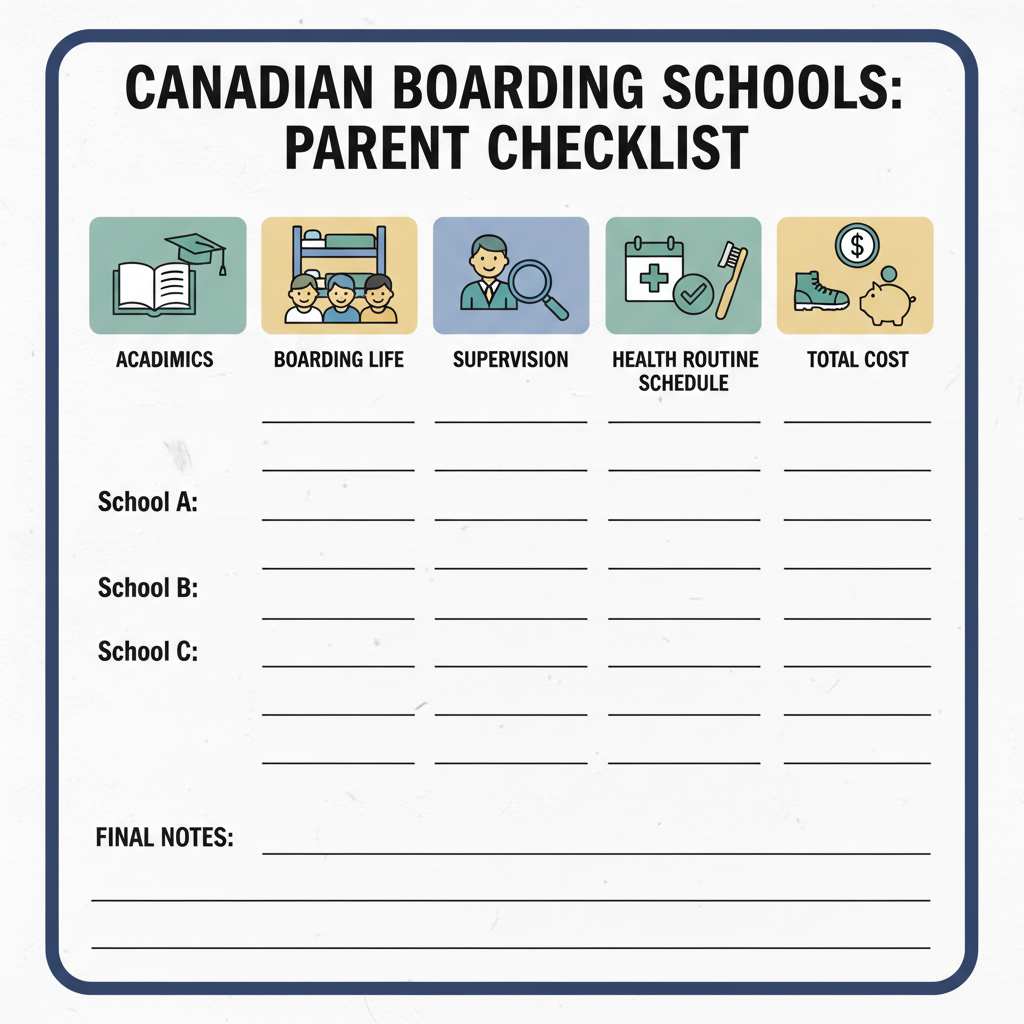
Choosing boarding schools in Canada becomes far less overwhelming when you turn big emotions into verifiable questions. Focus on your child’s daily routine, supervision systems, academic fit, and total cost, and then compare schools using the same checklist each time. If you stay fact-based and child-centred, you will make a decision you can stand behind with confidence.
About Think Academy
Think Academy Canada is a K-12 mathematics tutoring programme, part of TAL Education Group. We work with motivated students across Canada from Grade 1 through Grade 12, with a focus on curriculum support, assessment preparation, and competition mathematics including CEMC and AMC. All lessons are delivered online. Follow us on Instagram at @thinkacademyca.

