When students ask, “Why do we have to learn math?” educators often default to practical explanations like “You’ll use it later in life.” While this response is logical, it rarely resonates with students. To truly address this challenge, teachers need to connect mathematics to students’ lives in meaningful ways, fostering intrinsic motivation and creating a more engaging classroom environment. This article explores effective strategies for reshaping students’ perceptions of math, focusing on math education, learning motivation, and teaching strategies.
Understanding Students’ Resistance to Math
Students’ skepticism about math often stems from a perceived lack of relevance. They might struggle to see how solving equations or learning about geometric principles applies to their daily lives. Additionally, math can be intimidating due to its complexity, leading to frustration and disengagement. Teachers must first recognize these underlying issues to effectively address students’ concerns.
Moreover, psychological factors play a role. Adolescents, for instance, seek autonomy and purpose in their learning. They want to feel that their education connects to their personal goals and interests. Therefore, responding to their questions about math’s necessity requires addressing both their intellectual and emotional needs.
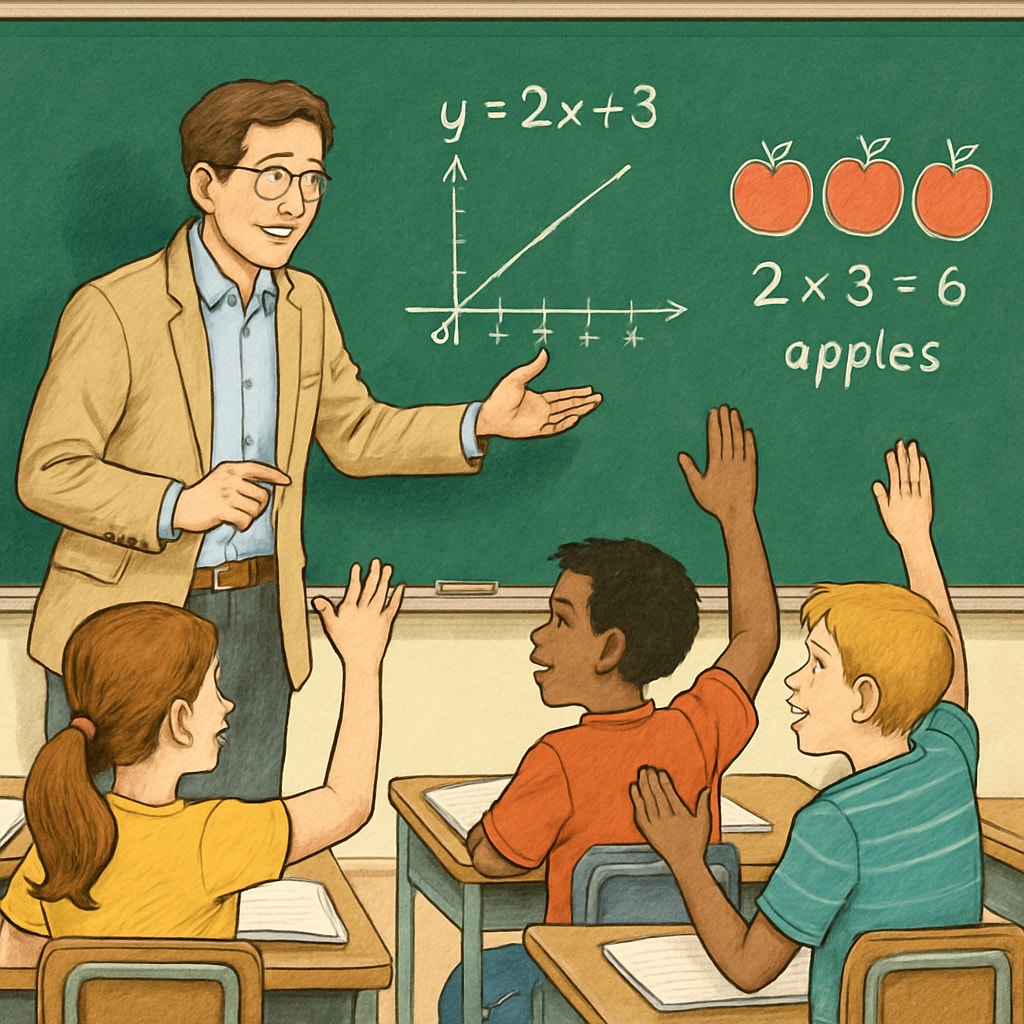
Connecting Math to Real-Life Scenarios
One of the most impactful ways to demonstrate math’s value is by linking it to real-world applications. For example:
- Show how percentages and ratios are essential for budgeting and shopping.
- Explain how geometry is used in architecture, engineering, and art.
- Discuss statistics in sports analysis or healthcare decision-making.
By presenting relatable examples, you make math more tangible and less abstract. When students see how professionals use math in various industries, they begin to appreciate its importance beyond the classroom.
For instance, the concept of the Golden Ratio can be tied to art, design, and nature, illustrating math’s aesthetic appeal and universal presence. Similarly, probability can be linked to everyday decision-making, such as understanding risks and rewards.

Fostering Intrinsic Motivation in Math Education
Intrinsic motivation—the desire to learn for personal satisfaction—plays a crucial role in math education. To cultivate this, educators can adopt the following techniques:
- Encourage curiosity: Present math problems as puzzles or challenges that spark interest.
- Make it interactive: Use games, group activities, or technology to make learning math engaging and fun.
- Personalize learning: Tailor lessons to align with students’ passions, such as using sports statistics for athletes or video game algorithms for gamers.
For example, incorporating interactive tools like dynamic geometry software or online graphing calculators can make abstract concepts more accessible. As a result, students are more likely to engage with the subject matter.
Transforming Classroom Dynamics
To sustain students’ interest in math, a supportive and collaborative classroom environment is essential. Teachers can achieve this by:
- Building confidence: Celebrate small successes to help students overcome fear of failure.
- Encouraging questions: Create a safe space where students feel comfortable asking questions and expressing doubts.
- Incorporating storytelling: Share narratives about historical figures in mathematics or real-world problem-solving scenarios.
As a result, students not only develop a deeper understanding of math but also build skills like critical thinking and problem-solving. These skills are transferable to various aspects of life, reinforcing the subject’s long-term value.
For further exploration, resources like Golden Ratio on Britannica provide excellent insights into math’s interdisciplinary applications, bridging the gap between theory and practice.
Conclusion: Reframing Math’s Role in Education
Responding to students’ doubts about math requires more than practical answers; it demands creativity, empathy, and a commitment to connecting learning to life. By addressing their psychological needs, illustrating real-world applications, and transforming classroom dynamics, educators can inspire students to see math not as a chore but as a valuable tool for understanding the world.
Ultimately, the goal of math education is not just to prepare students for future careers but to equip them with problem-solving and analytical skills that enrich their lives in countless ways. By reshaping how math is taught, teachers can help students develop a lifelong appreciation for the subject.