When students ask, “Why do we need to learn math?” it’s tempting for educators to respond with practical reasons like, “You’ll need it for your career” or “You’ll use it later in life.” However, mathematics education goes far deeper than its immediate utility. To truly inspire students, teachers must address the underlying psychological needs driving these questions, connect mathematics to their everyday lives, and implement creative teaching strategies. This article explores how to cultivate a deeper appreciation for math by focusing on intrinsic motivation, reshaping classroom dynamics, and fostering long-term learning engagement.
Understanding the Roots of Student Resistance
To effectively address students’ doubts about math, it’s essential to understand why they question its value in the first place. Often, such resistance stems from a lack of perceived relevance, fear of failure, or frustration with abstract concepts. For example, students may feel math is disconnected from their passions or daily experiences, making it harder to engage. Additionally, the pressure to achieve high grades can create anxiety, further alienating them from the subject.
Recognizing these barriers is the first step toward building a more inclusive and motivating approach to mathematics education. By acknowledging students’ emotions and validating their concerns, teachers can create a supportive environment where curiosity thrives.

Connecting Mathematics to Real-World Applications
One of the most effective ways to demonstrate the importance of math is to show its role in everyday life. While “practical utility” is not the ultimate answer, it serves as a bridge to deeper understanding. For instance:
- Highlight how math is used in personal finance, such as budgeting or calculating interest rates.
- Introduce real-world scenarios like designing a sustainable building or planning a trip, requiring geometry or algebra.
- Discuss the role of math in technology, from coding algorithms to artificial intelligence development.
These examples illustrate that math is not an isolated discipline but a vital tool for solving real-world issues. For instance, students interested in sports can explore statistics to analyze player performance, while those passionate about art can learn about proportions and symmetry.
Fostering Intrinsic Motivation Through Teaching Strategies
Rather than relying solely on external rewards like grades, teachers can cultivate intrinsic motivation by emphasizing the joy of problem-solving and critical thinking. Here are a few strategies:
- Encourage a Growth Mindset: Help students view challenges as opportunities to grow rather than as obstacles. Share stories of mathematicians who overcame failures to achieve great discoveries.
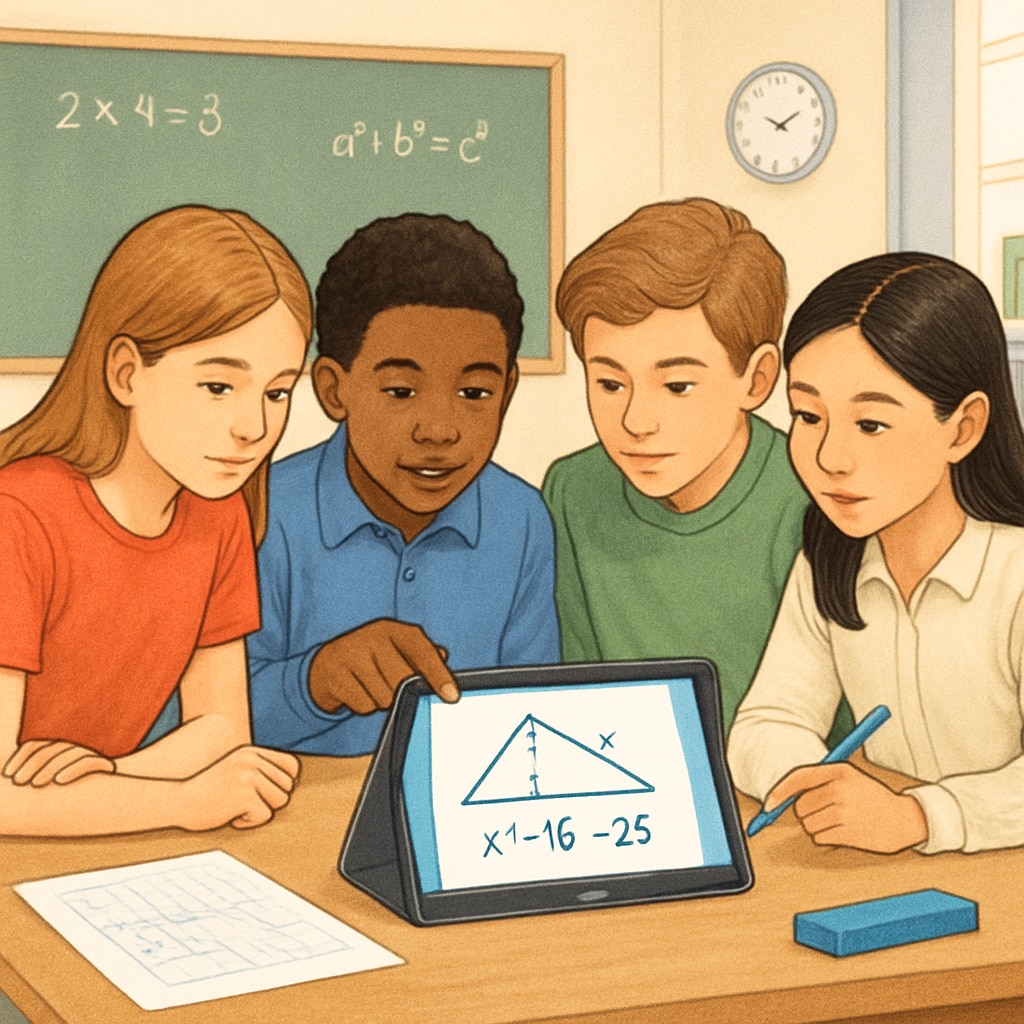
- Incorporate Collaborative Learning: Group projects can make math feel more dynamic and less intimidating. Encourage students to work together to solve complex problems, fostering teamwork and communication skills.
- Use Technology Creatively: Leverage interactive tools and apps, such as gamified learning platforms, to make abstract concepts more tangible and engaging.
By shifting the focus from rote memorization to exploration and creativity, students can begin to see math as a meaningful and enjoyable pursuit.
Redefining Math’s Role Beyond the Classroom
To truly reshape students’ perceptions, educators must also emphasize how math develops transferable skills that go beyond solving equations. Critical thinking, logical reasoning, and problem-solving are foundational skills applicable to every career and life situation. For instance:
- Critical Thinking: Math teaches students to analyze information, identify patterns, and make reasoned decisions.
- Resilience: The process of working through difficult problems builds perseverance and adaptability.
- Creativity: Solving open-ended problems encourages innovative thinking and experimentation.
When students understand that math helps them become better thinkers and problem-solvers, they are more likely to value the subject, even if they don’t pursue a math-heavy career.
Conclusion: Transforming the Classroom Narrative
Addressing students’ skepticism about learning math requires more than quick answers. It involves a thoughtful approach that connects abstract concepts to real-world applications, nurtures intrinsic motivation, and highlights the broader benefits of mathematical thinking. By adopting these strategies, educators can transform the learning environment, inspiring students to see math not as a hurdle to overcome, but as a tool to unlock their potential.
As a result, students who once questioned “Why do we need to learn math?” may instead ask, “What new possibilities can math help me explore today?”
Readability guidance: This article uses short paragraphs, clear transitions, and lists to enhance readability. Avoiding overly complex sentences ensures the content remains accessible to a broad audience, including educators and parents.