


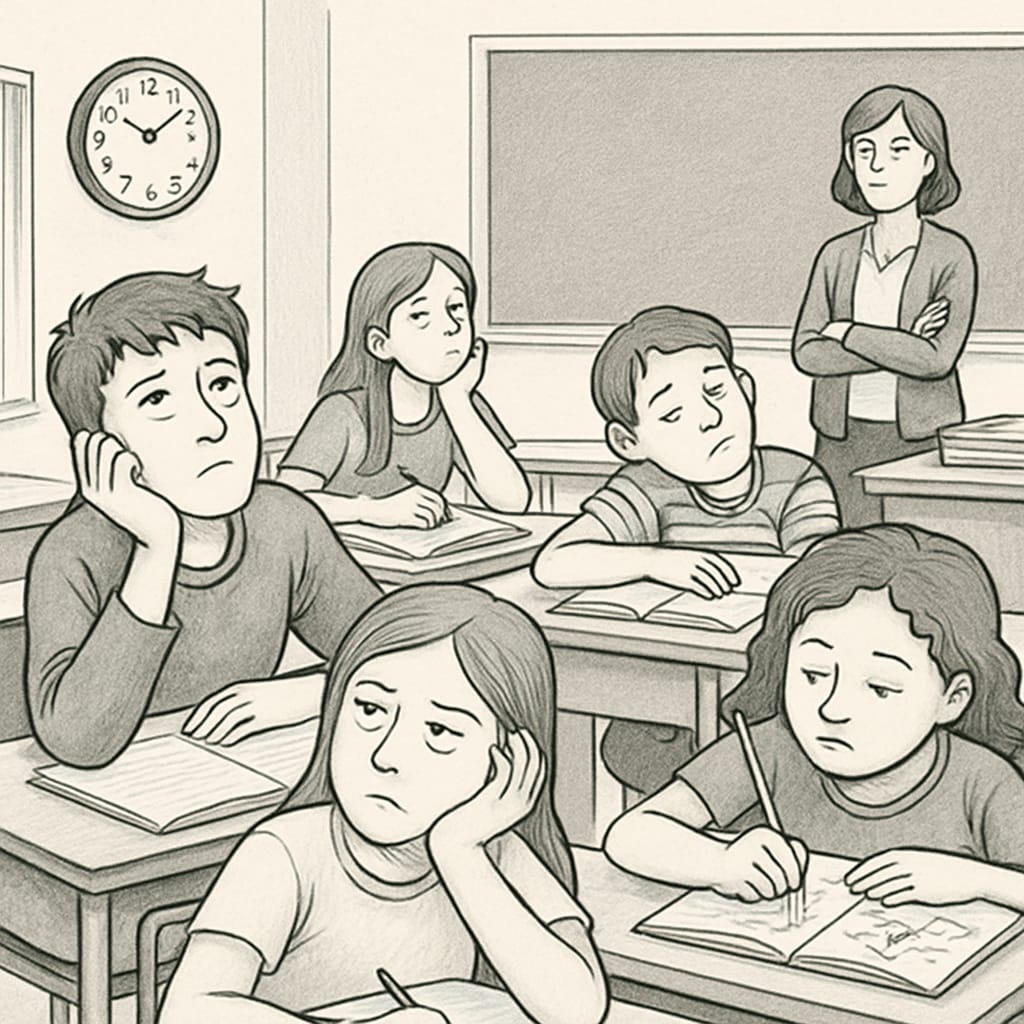
In classrooms worldwide, student boredom has become a persistent and concerning issue. Cross-national data highlights that boredom in K12 education is not confined to specific countries or cultures; it is a shared challenge. This phenomenon has serious implications for student engagement, academic achievement, and educational equity. By exploring the causes, consequences, and potential solutions for addressing student boredom, educators can rethink how to create more stimulating learning environments.
Understanding the Scope of Student Boredom
Research spanning multiple countries has consistently shown that student boredom is a prevalent issue in K12 classrooms. A study published in the Britannica overview of education found that nearly 50% of students report feeling bored in school. This issue transcends borders, with students in diverse educational systems reporting similar experiences of disengagement.
Boredom in education often stems from repetitive instruction, a lack of relevance to real-world applications, and overly standardized curricula. Students frequently express frustration when classroom activities fail to challenge them or meet their interests. For example:
- In the United States, students cite monotony in teaching methods as a major factor.
- In Japan, emphasis on rote memorization contributes to disengagement.
- European students often point to a lack of autonomy in their learning experiences.
The Consequences of Boredom in Education
Student boredom is more than a fleeting feeling; it has long-term consequences. When students are disengaged, they are less likely to retain information, participate actively in class, or develop critical thinking skills. Over time, this can lead to lower academic performance and reduced motivation to pursue higher education.
Moreover, boredom can exacerbate educational inequalities. Students from disadvantaged backgrounds may already face barriers to academic success, and disengagement further hinders their ability to compete academically. According to a report by the OECD, students who struggle with boredom are more likely to drop out of school, limiting their future opportunities.
Effective Strategies to Combat Boredom
Addressing student boredom requires a multifaceted approach. Here are several actionable strategies:
- Personalized Learning: Tailoring instruction to individual student interests and abilities can increase engagement. This may involve project-based learning or integrating technology into the classroom.
- Interactive Teaching Methods: Incorporating group discussions, hands-on activities, and gamified learning can make lessons more dynamic.
- Real-World Relevance: Demonstrating how classroom concepts apply to everyday life helps students see the value of their education.
- Student Autonomy: Allowing students to have a say in their learning journey fosters a sense of ownership and motivation.

Collaboration Across Borders
Given the global nature of student boredom, international collaboration can play a key role in finding solutions. By sharing successful strategies and adapting them to local contexts, educators can create more engaging classrooms worldwide. For example:
- Finland’s focus on student well-being and creativity could inspire changes in more rigid systems.
- Singapore’s emphasis on teacher training highlights the importance of equipping educators with innovative teaching tools.
- Blended learning models in countries like Sweden demonstrate the potential of technology to enhance engagement.
As a result, global partnerships can help address common challenges while respecting cultural and systemic differences.
Conclusion
Student boredom in education is a universal issue, but it is not insurmountable. By leveraging cross-national data, educators can better understand the root causes and implement evidence-based solutions. Addressing boredom is not just about improving test scores; it is about inspiring a lifelong love for learning. With the right strategies, classrooms can become places of curiosity and engagement, benefiting students around the world.
Readability guidance: This article uses short paragraphs, clear transitions, and a mix of lists and examples to maintain reader interest. Key concepts are explained in accessible language, and actionable insights are provided to encourage practical implementation.

