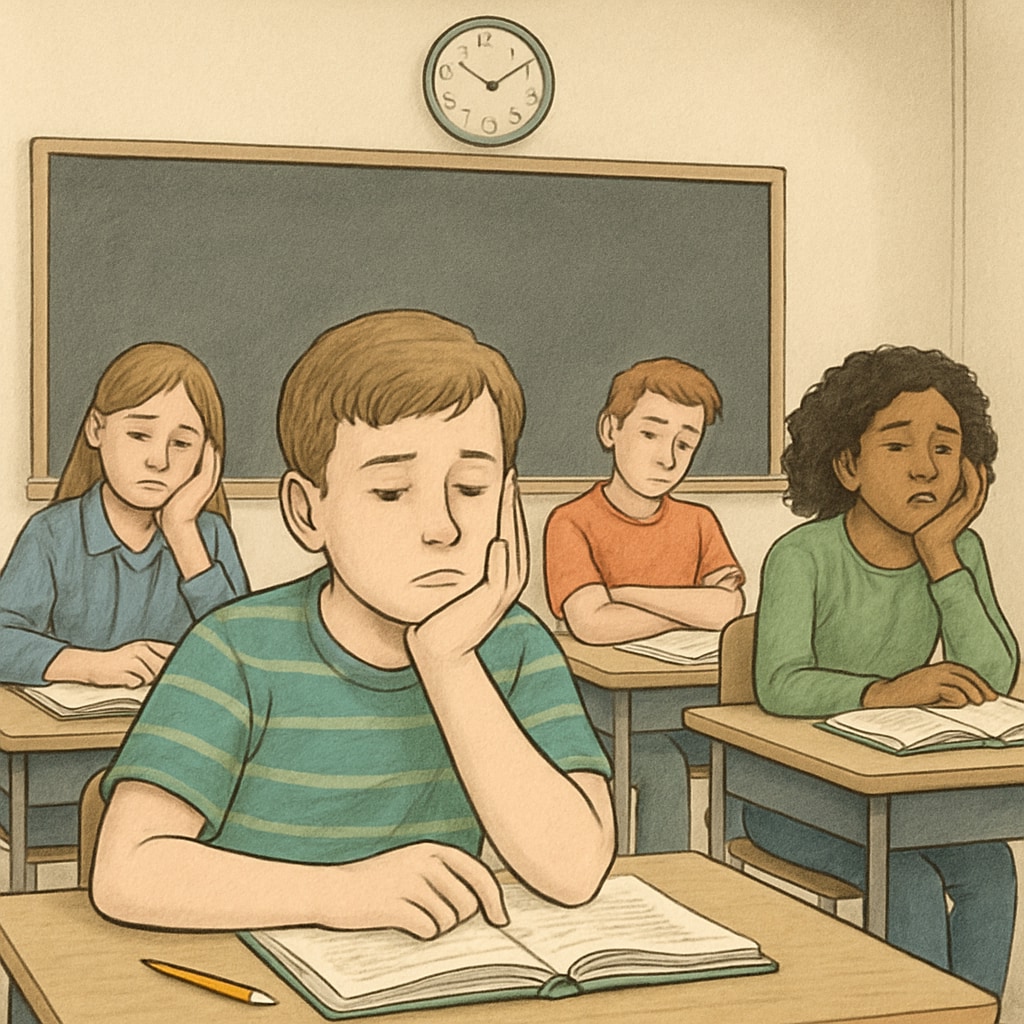
Student boredom in K12 education is increasingly recognized as a significant barrier to effective learning. Research indicates that disengagement in the classroom is a global issue, impacting not only academic performance but also students’ overall motivation and well-being. By analyzing education research and classroom engagement data from multiple countries, this article dives into the root causes of student boredom and explores strategies that educators worldwide can adopt to address this challenge.
Understanding the Global Scope of Student Boredom
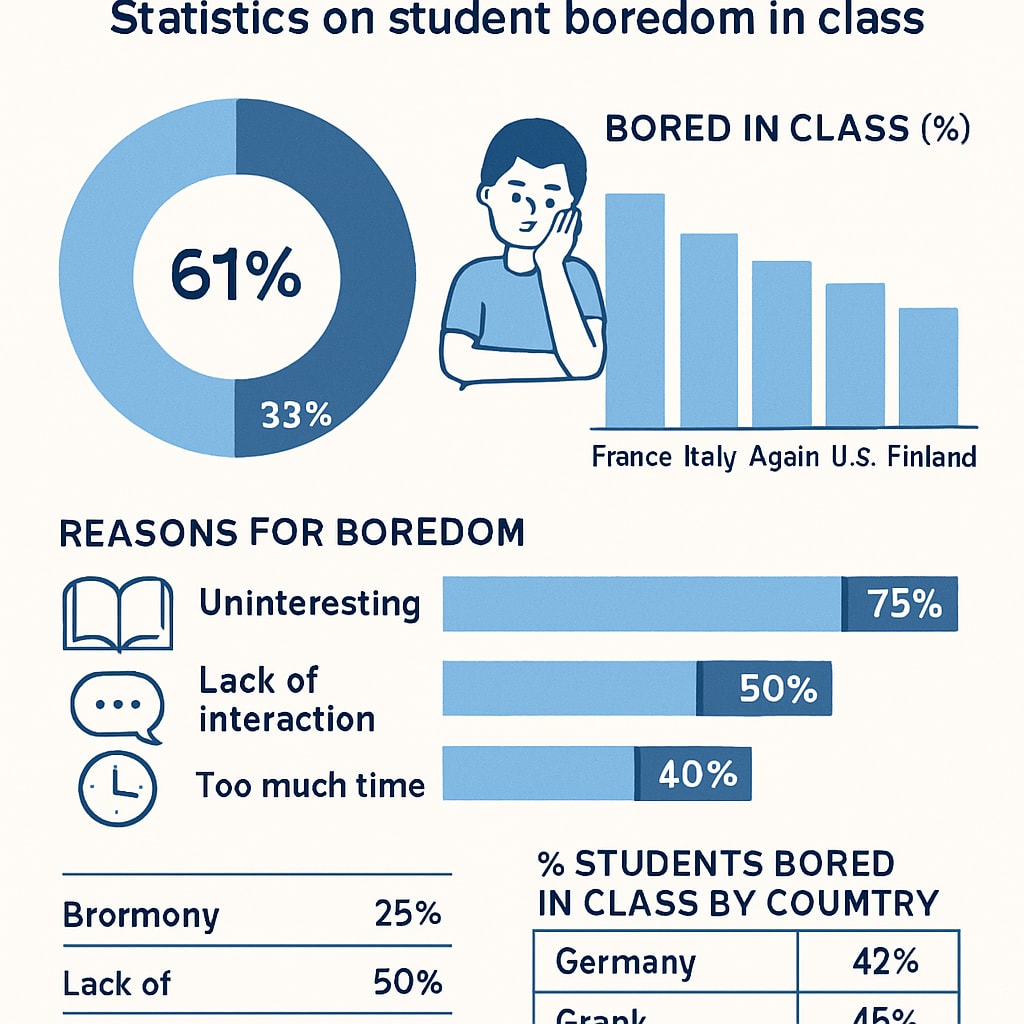
Student boredom is not confined to a single region or country—it is a phenomenon observed across diverse cultural and educational contexts. According to a 2022 study published in the Encyclopedia Britannica, approximately 60% of K12 students globally report feeling disengaged at least once during their school day. This disengagement often stems from a lack of connection to the curriculum, monotonous teaching methods, or an overwhelming focus on standardized testing.
Research from the Organisation for Economic Co-operation and Development (OECD) further highlights that students in countries with high academic performance, such as Finland and South Korea, also report significant levels of boredom. This trend suggests that academic success does not necessarily equate to emotional or intellectual engagement in the classroom.
Key Causes of Student Boredom in the Classroom
Several factors contribute to the widespread issue of student boredom. These include:
- Rigid Curricula: Overly structured and standardized curricula often leave little room for creativity or student-driven learning.
- One-Size-Fits-All Teaching: Teaching methods that fail to account for diverse learning styles and needs can alienate students.
- Lack of Autonomy: When students have no say in what or how they learn, they may feel disconnected from the material.
- Overemphasis on Grades: A focus on test scores and grades can overshadow the intrinsic joy of learning.
For example, a report by the Programme for International Student Assessment (PISA) revealed that students in high-pressure academic systems are more likely to experience boredom and stress simultaneously, creating a compounded negative effect on engagement.
Strategies to Enhance Classroom Engagement
Addressing student boredom requires a multi-faceted approach that targets both systemic and classroom-level factors. Educators and policymakers can consider the following strategies:
- Personalized Learning: Adopting technology and adaptive learning tools to tailor lessons to individual students’ needs and interests.
- Interactive Teaching Methods: Incorporating group discussions, project-based learning, and hands-on activities to make lessons more engaging.
- Empowering Students: Allowing students to have a voice in their learning process, including choosing topics or methods of assessment.
- Reducing High-Stakes Testing: Shifting focus from grades to skill mastery and long-term understanding.
For example, countries like Finland have adopted less rigid curricula and emphasized teacher training to foster more dynamic and engaging classrooms, resulting in higher levels of student satisfaction and participation.
The Role of Teachers and Policymakers
Ultimately, the responsibility to combat student boredom lies with both educators and policymakers. Teachers can focus on creating a more inclusive and stimulating classroom environment, while policymakers must work to reduce systemic pressures, such as excessive testing and rigid standards.
As education continues to evolve, understanding and addressing student boredom will remain a critical component of fostering effective and engaging learning environments. By prioritizing research-backed strategies and listening to students’ voices, we can move toward a future where boredom is the exception, not the norm.
Readability guidance: This article uses concise paragraphs, lists to summarize main points, and transitions to ensure a smooth flow. It minimizes passive voice and avoids complex sentence structures for greater accessibility.