Toronto has more than 400 registered private and independent schools — from century-old institutions like Upper Canada College (founded 1829) and Bishop Strachan School (1867) to modern International Baccalaureate world schools, Montessori programs, and faith-based academies. With day tuition ranging from $12,000 to over $48,000 per year, the choice matters financially as much as academically. This guide cuts through the marketing language to give Canadian parents an honest overview of Toronto private schools: which are genuinely the top tier, how admissions actually work at the most selective schools, what each school is known for, and how to think about whether private school is right for your family in the first place. Most parents researching this topic don’t need another brochure — they need an honest map.
What counts as a “top” Toronto private school?
Before listing schools, it’s worth being clear about what makes a private school “top.” The term gets thrown around loosely, and different parents mean different things.
Three legitimate definitions:
Academic selectivity. Schools with the lowest acceptance rates and strongest entrance requirements. By this measure, University of Toronto Schools (UTS) sits at the top with an acceptance rate around 20%.
Academic results. Schools that consistently produce students with top university placements (Ivy League, Oxford, McGill, U of T’s top programs). Most of the schools on the standard “top tier” list perform well here, with UTS, UCC, Branksome, and Havergal frequently leading.
Tuition and prestige. Schools with the highest tuition, longest history, and strongest alumni networks. Branksome Hall has the highest tuition in Toronto (averaging $67,925/year). Upper Canada College, founded in 1829, is the oldest.
These three definitions overlap heavily but not perfectly. A few schools rank top by academic selectivity but have lower tuition; others have astronomical tuition but less selective admissions. This guide treats the “top tier” as schools that score highly on at least two of these three dimensions.
The top tier of Toronto private schools
These are the schools most often cited as the leading independent schools in Toronto. The order below is roughly by academic selectivity and reputation, but readers should note that fit matters more than ranking — the “best” school is the one that suits your child’s needs.
University of Toronto Schools (UTS)
- Type: Co-educational, Grades 7-12
- Founded: 1910
- Tuition: ~$38,000/year (notably more affordable than the others on this list)
- Acceptance rate: ~20% (the most selective in Toronto)
- Known for: Academic rigour, strong STEM and humanities programs, university-prep focus
UTS is the most academically selective private school in Toronto. Originally a “lab school” affiliated with the University of Toronto, it’s been independent since 2009 but maintains a strong U of T connection. Admissions are entirely merit-based — UTS does not consider legacy admissions in the way some peer schools do.
Who UTS fits: Strong academic students who would thrive in a rigorous, competitive environment. UTS isn’t a finishing school; it’s an intellectual one.
Upper Canada College (UCC)
- Type: All-boys, Grades JK-12
- Founded: 1829 (oldest private school in Toronto)
- Tuition: ~$45,000-$48,000/year for day, $80,000+ for boarding
- Acceptance rate: ~25-30%
- Known for: Tradition, alumni network, IB Diploma Programme
UCC is Toronto’s oldest independent school and has the largest endowment. It runs the full IB programme and is known for producing students with very strong university outcomes. The campus is significant — UCC owns 35 acres in midtown Toronto.
Who UCC fits: Boys whose families value tradition, structure, and the IB curriculum. The alumni network genuinely matters in some careers (law, finance, politics).
Branksome Hall
- Type: All-girls, Grades JK-12
- Founded: 1903
- Tuition: $45,140-$90,710/year (highest in Toronto, average $67,925)
- Acceptance rate: ~25-35%
- Known for: IB World School, strong STEM, leadership focus
Branksome Hall is Toronto’s premier all-girls school and one of only a handful of IB world schools in Canada. It’s known for emphasising leadership development alongside academics. The campus in Rosedale is beautiful and well-resourced.
Who Branksome fits: Girls in families that prioritise the IB curriculum and a single-gender academic environment. Branksome’s “leadership” focus is genuine — many graduates go on to top-tier universities and competitive professional programs.
Havergal College
- Type: All-girls, Grades JK-12
- Founded: 1894
- Tuition: $47,000-$80,000/year (highest tuition by some measures)
- Acceptance rate: ~25-35%
- Known for: Athletics, arts, university-prep
- Note: Frequently ranked as Toronto’s most expensive private school
Havergal College is Branksome’s main peer in Toronto’s all-girls private school landscape. The two schools are often grouped together, though they differ in curriculum approach. Havergal does not run the IB programme; it follows the Ontario curriculum with significant enrichment.
Who Havergal fits: Girls whose families prefer the Ontario curriculum over IB, or who prioritise the school’s strong athletic and arts programs.
The Bishop Strachan School (BSS)
- Type: All-girls, Grades JK-12
- Founded: 1867
- Tuition: ~$45,000-$50,000/year
- Acceptance rate: ~30-40%
- Known for: Liberal arts, individualised attention
BSS is the oldest girls’ school in Toronto and has a strong reputation for liberal arts education. It’s slightly less selective than Branksome or Havergal but maintains excellent academic standards. Smaller class sizes are emphasised.
Who BSS fits: Girls who would thrive in a smaller, more personalised academic setting. BSS is academically strong without the intense pressure of UTS-style competition.
St. Andrew’s College
- Type: All-boys, Grades 5-12 (boarding and day)
- Founded: 1899
- Tuition: ~$45,000/year for day, ~$80,000/year for boarding
- Located: Aurora (just north of Toronto)
- Known for: Boarding programs, leadership, traditional schooling
St. Andrew’s is one of the strongest boarding schools in the Toronto area. Roughly half the student body boards. It maintains a traditional, structured environment and has produced significant alumni across business, military, and politics.
Who St. Andrew’s fits: Boys whose families value boarding education, structure, and traditional male schooling. Strong choice for families outside Toronto who want premium Canadian boarding.
Trinity College School
- Type: Co-educational, Grades 5-12 (boarding and day)
- Founded: 1865
- Tuition: ~$45,000/year for day, ~$85,000/year for boarding
- Located: Port Hope (just east of Toronto)
- Known for: Boarding programs, IB Diploma Programme, traditional education
TCS is another major Ontario boarding school. Like St. Andrew’s, it maintains a traditional structure and emphasises character development alongside academics.
Crescent School
- Type: All-boys, Grades 3-12
- Founded: 1913
- Tuition: ~$45,000/year
- Known for: Character education, smaller class sizes
Crescent positions itself as a leadership-focused all-boys school with a distinctive “Men of Character” educational philosophy. Smaller than UCC, more personalised in approach.
St. Clement’s School
- Type: All-girls, Grades 1-12
- Founded: 1901
- Tuition: ~$40,000/year
- Known for: Smaller community, strong academics
St. Clement’s is one of Toronto’s smaller top-tier girls’ schools, valued by families who want strong academics in a more intimate environment than Branksome or Havergal.
Royal St. George’s College
- Type: All-boys, Grades 3-12
- Founded: 1964
- Tuition: ~$40,000/year
- Known for: Music program, smaller community
A smaller all-boys school with a particularly strong music program — many students are involved in the school’s choral and instrumental programs.
How Toronto private school admissions actually work
The single most important thing parents underestimate: admissions to top Toronto private schools is competitive, multi-step, and starts earlier than most families realise.
The admissions timeline
For most top schools, the cycle for September entry works like this:
| Month | What’s happening |
|---|---|
| September (year before entry) | Applications open, school tours begin |
| October-November | Applications submitted, references gathered |
| November-January | SSAT testing window for applicable schools |
| December | Application deadline (typically December 1) at top schools |
| December-January | Student and parent interviews |
| February | Acceptance decisions sent |
| March | Enrolment deposits due |
If your child is applying for September 2027 entry, the work starts in September 2026. Most parents start the process 12-18 months too late and end up rushed, particularly with SSAT preparation.
What admissions committees actually weigh
The standard application package includes:
Academic records. Report cards from the past 2-3 years. Schools look for consistent strong performance, not just one good year.
Standardised test scores. Most top Toronto private schools require the SSAT (Secondary School Admission Test) for Grade 7 or 9 entry. For deep coverage, see our complete SSAT guide for Canadian parents and our SSAT practice test guide.
Teacher references. Usually 2-3 references from current teachers, often including the homeroom teacher and a math/English teacher.
Student interview. All top schools interview prospective students. This is a real evaluation, not a formality — schools are assessing maturity, curiosity, and fit.
Parent interview. Many schools also interview parents. Schools are evaluating whether the family is a good fit for the community.
Character / extracurricular profile. Music, athletics, community service, leadership roles — these matter, particularly for distinguishing similar academic profiles.
SSAT Character Skills Snapshot. Most SSAT-using schools also receive the Character Skills Snapshot, an assessment of non-cognitive skills the EMA administers alongside the SSAT.
Why the SSAT matters more than parents realise
For schools that use the SSAT, the score is a meaningful filter. Highly selective schools (UTS, Branksome, UCC, BSS) typically expect SSAT scores in the 80th percentile or higher for competitive applications, with 90th+ percentile preferred. Lower scores aren’t automatically disqualifying if other parts of the application are strong, but they make admission significantly harder.
The math section of the SSAT is calculator-free and tests deep arithmetic fluency. Most Canadian students preparing for the SSAT find the math more challenging than they expected, even when they’re doing well in school math.
What can disqualify even a strong applicant
A few things that close doors at top schools:
- Inconsistent grades across years (suggests effort issues)
- Disciplinary issues in recent school records
- Missing the application deadline (rigidly enforced at top schools)
- Poor interview performance (especially silence, dismissiveness, or inability to articulate interests)
- SSAT scores below the school’s typical range without compensating excellence elsewhere
Toronto private school tuition and total cost
Tuition is only the start of what families pay.
Tuition ranges (2025-26)
| Tier | Annual day tuition |
|---|---|
| Smaller / specialised schools | $12,000-$25,000 |
| Mid-tier independent schools | $25,000-$40,000 |
| Top-tier private schools | $40,000-$50,000 |
| Premium / boarding-included | $60,000-$90,000+ |
Branksome Hall has the highest day tuition at $45,140-$90,710 (depending on grade and program), with an average around $67,925. Havergal College is also at the top of the tuition range. UTS is notably more affordable at around $38,000.
The hidden costs
Tuition is the headline number. Other significant costs:
- Application fees: $150-$300 per school
- Enrolment deposits: Often $1,000-$5,000 non-refundable
- Uniforms: $500-$1,500/year
- Books and supplies: $500-$2,000/year
- Trips, camps, and enrichment programs: Can add $2,000-$10,000+/year
- Transportation: Most top schools don’t provide buses; parent transport or paid bus services add up
- After-school programs: Often $500-$2,000 per term
- Tutoring and SSAT prep: Most families spend $3,000-$10,000+ on test prep alone
Plan for 20-30% above tuition for the realistic total cost of attendance.
Financial aid and scholarships
Nearly every top private school in Toronto offers financial aid, but the awarding processes vary. Some key points:
- Top schools allocate $1.5-$6 million annually in aid at the larger institutions
- Aid is typically need-based, with merit scholarships available at some schools
- Applications for aid happen alongside the main application — you can’t apply for aid after admission
- Aid awards are typically 30-100% of tuition, but full rides are rare
Don’t assume your family doesn’t qualify. Many schools’ aid programs reach further than parents expect.
Is private school worth it?
This is the question parents struggle with. Honest answers:
When private school is genuinely worth it
- Your local public school is genuinely weak, and you can verify this through Fraser Institute rankings or honest conversation with parents at the school
- Your child has specific needs (gifted, struggling, neurodivergent) that the public system isn’t serving well
- Your child is aiming at competitive university programs (Ivy League, Oxford, top STEM programs) where the private school environment provides genuine advantage
- Your family values the alumni network in a specific field (law, finance, medicine — yes, this is real)
- Your child thrives in smaller, more structured environments that public schools often can’t provide
When private school isn’t worth it
- Your local public school is genuinely strong. Many Toronto public schools (Earl Haig, Northern Secondary, Marc Garneau, Earl of March) produce outcomes equivalent to or better than mid-tier private schools.
- You’re considering it for status reasons without academic or personal fit being clear
- Your child is resistant to the idea, and the resistance isn’t just nerves
- The financial strain would be significant. Going into significant debt or sacrificing retirement savings for K-12 private school is rarely a good trade for university outcomes
The honest comparison
Strong public high schools in Toronto produce excellent university admission outcomes. The genuine difference between top public and top private is:
- Smaller class sizes (12-15 students vs 25-30)
- More individual teacher attention
- Stronger non-academic programs (athletics, arts, leadership)
- The alumni network (genuinely matters in specific careers)
- Cultural fit for families who value the private school environment
Top universities (Toronto, McGill, Queens, McMaster, Western, UBC) accept students from both streams. Your child’s effort, grades, and extracurricular profile matter more than where they went to high school.
How to choose between top Toronto private schools
Once your family has decided private school is right, choosing between specific schools is the next challenge.
Questions to ask each school
When visiting, ask each school’s admissions office:
- What percentage of graduates go to which universities? (Top schools track this and share it.)
- What’s the average class size in Grades 9-12?
- What’s the breakdown of curriculum approach (Ontario, IB, hybrid)?
- What’s the school’s approach to academic pressure and student wellbeing?
- What financial aid is available and what’s the timeline?
- What’s the typical SSAT score range of admitted students? (Some will share this; many won’t, but ask.)
- What does a typical Grade 9 schedule look like?
- What’s the school’s policy on retention and graduation rates?
Red flags worth noticing
- Vague answers to specific questions about academic results
- Inability to articulate what makes the school distinct from peers
- Reluctance to discuss attrition or retention
- Pushy admissions process that feels like sales
- Heavy emphasis on prestige rather than student outcomes
Questions to ask yourself
- Does the school fit my child’s personality and learning style?
- Can our family realistically afford this for the next 6-12 years?
- Would my child thrive in a single-gender or co-ed environment?
- Does the school’s curriculum match my child’s interests (IB vs Ontario, traditional vs progressive)?
- How will transportation and logistics work?
How to prepare your child for Toronto private school admissions
Preparation timeline varies based on entry grade, but a few principles apply across the board.
Academic preparation
- Maintain strong report card grades in the year before application. Top schools want to see consistency.
- Build SSAT-level math fluency through structured practice. The calculator-free, multi-step math problems require months of preparation for most students.
- Develop reading comprehension and vocabulary through wide reading, particularly fiction and non-fiction at slightly above current grade level.
- Practise writing under timed conditions — the SSAT writing sample is 25 minutes and admissions officers read it.
Interview preparation
- Practise articulating interests in detail. “I like reading” isn’t enough — “I’ve been reading historical fiction lately, especially about World War II, and I’m fascinated by how everyday people made decisions under pressure” is what schools want to hear.
- Prepare specific questions about each school. Generic questions signal disinterest.
- Practise conversational answers, not memorised ones. Schools see through scripted responses.
Extracurricular profile
Top schools value:
- Sustained commitment over time (3+ years in something) more than breadth
- Leadership roles of any kind (team captain, club president, peer mentor)
- Genuine passion in a specific area (music, sport, science, art)
- Community service that shows initiative, not just attendance
A child with deep involvement in two or three things outperforms a child with shallow involvement in ten.
How Think Academy Canada supports private school admissions
Think Academy is the international arm of TAL Education Group, one of the largest education companies in the world. Our Canadian programs are well-suited to families preparing for Toronto private school admissions.
Curriculum that runs ahead of the Ontario standard. Our students consistently meet next-grade math content before their school classmates do. The math depth required for top private school admissions and SSAT performance maps directly to what our Grade 5-9 students work on regularly.
Calculator-free mental math fluency. Our practice problems deliberately build the kind of mental math the SSAT requires — exactly the area most Canadian students struggle with on the test.
Structured, active learning. Our platform is built around active problem-solving with immediate feedback, which is the format that builds durable skills for high-stakes admissions testing.
Personal teacher feedback. Every homework set is marked personally with feedback on the types of mistakes your child is making — the same diagnostic approach that’s essential for SSAT preparation.
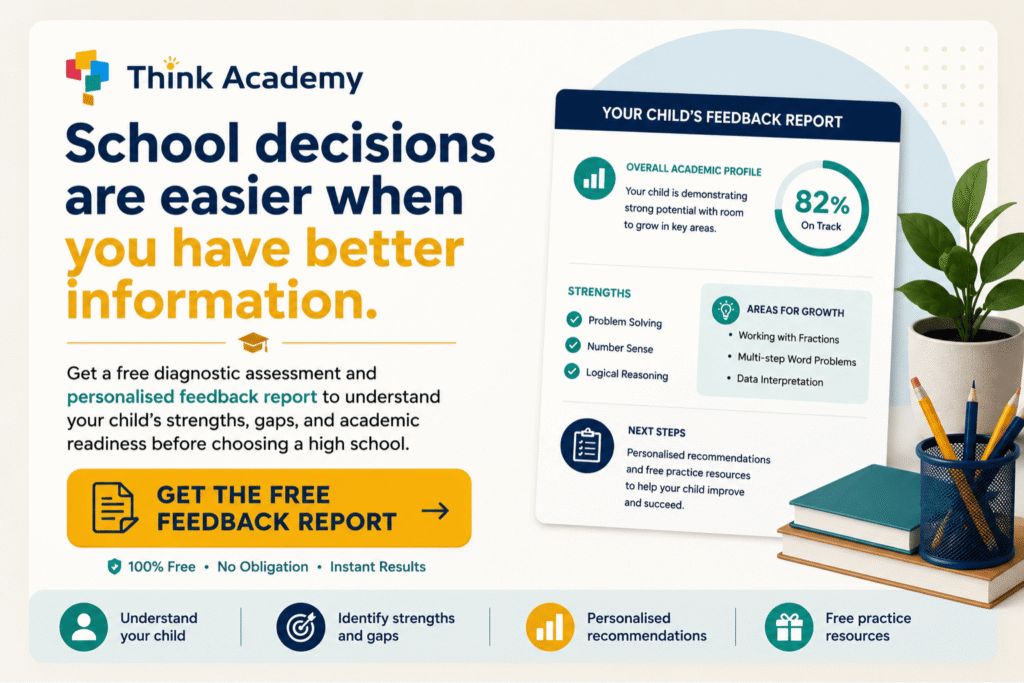
Free math assessment. Find out exactly where your child stands before committing to a private school admissions pathway. Our free assessment takes about 20 minutes, gives you a detailed feedback report on strengths and gaps, and includes free practice resources tailored to your child’s level. It’s the fastest way to know whether your child is at the academic level the top Toronto private schools expect.
Frequently asked questions
What is the best private school in Toronto?
There’s no single “best” — fit matters more than ranking. By academic selectivity, University of Toronto Schools (UTS) is the most competitive. By tradition and alumni network, Upper Canada College leads. By all-girls academic prestige, Branksome Hall and Havergal College are typically grouped at the top. The right school depends on your child’s needs.
How much does private school in Toronto cost?
Day school tuition ranges from $12,000 to $48,000+ per year for established schools. The top tier (UCC, Branksome, Havergal, UTS, BSS) sits in the $40,000-$48,000 range for day tuition, with boarding adding $30,000-$40,000. Branksome Hall has the highest day tuition (averaging $67,925/year including all fees).
How hard is it to get into Toronto private schools?
It varies. University of Toronto Schools has an acceptance rate around 20%, making it the most selective. Most other top private schools have acceptance rates of 25-40%. The application process is competitive and includes academic records, standardised testing (often SSAT), references, and interviews.
Do Toronto private schools require the SSAT?
Most do for Grade 7 and Grade 9 entry. UCC, Branksome Hall, Havergal, UTS, BSS, St. Andrew’s, Trinity College School, and many others require it. Some elementary entry doesn’t require the SSAT but uses school-specific assessments instead. Always check the specific school’s requirements.
When should I start applying to Toronto private schools?
About 12-18 months before September entry. Most applications open in September of the year before entry, with deadlines on December 1 and decisions in February. Top schools enforce deadlines strictly.
Are Toronto private schools worth the cost?
It depends on your family’s specific situation. They offer genuine advantages in class size, individual attention, and alumni networks. But strong Toronto public schools also produce excellent university outcomes. Worth-it depends on local public school quality, your child’s specific needs, and your family’s financial flexibility.
What is the oldest private school in Toronto?
Upper Canada College, founded in 1829, is the oldest private school in Toronto. The Bishop Strachan School (1867) is the oldest girls’ school.
What is the most expensive private school in Toronto?
Branksome Hall has the highest average day school tuition at approximately $67,925/year when accounting for grade-level variations. Havergal College is also among the most expensive. Both can exceed $80,000/year for the highest grade levels.
How many private schools are in Toronto?
Over 400 registered private and independent schools serve the Toronto area, ranging from small Montessori programs to large traditional institutions like UCC and Branksome.
Is private school better than public school in Toronto?
Not categorically. Top Toronto public high schools (Earl Haig, Northern Secondary, Marc Garneau) produce excellent university outcomes. Private schools offer smaller classes, more individual attention, and alumni networks but cost $40,000+ per year. The right answer depends on your specific local public school and your child’s needs.
What’s the difference between Branksome Hall and Havergal?
Both are top-tier all-girls schools in Toronto. The biggest difference: Branksome is an IB World School, while Havergal follows the Ontario curriculum. Tuition is similar. Most families choose between them based on curriculum preference and campus visit experience.
Can my child get into a top Toronto private school with average grades?
It’s difficult. Top schools (UTS, UCC, Branksome, Havergal, BSS) typically expect strong, consistent academic performance. Exceptional extracurriculars, character profile, or specific talents can compensate for average grades in some cases, but academic excellence is typically the baseline expectation.
What financial aid is available at Toronto private schools?
Most top private schools offer need-based financial aid, with the largest schools allocating $1.5-$6 million annually. Awards range from 30-100% of tuition, though full coverage is rare. Aid applications happen alongside main applications — apply for both simultaneously.
Are co-ed or single-gender private schools better?
Neither is categorically better. Single-gender schools offer focused environments that some families value. Co-ed schools provide a more typical social experience. Research is mixed on academic outcomes — fit with your child’s personality matters more than the structure itself.
About Think Academy Canada
Think Academy Canada, part of TAL Education Group, supports K–12 students with structured math programs built around an online interactive platform, gamified learning, and teachers who personally mark every homework set. Our curriculum runs ahead of the provincial standards and is designed to prepare students for both school excellence and competitive admissions tests like the SSAT.
🟦 Follow us on Instagram @thinkacademyca for daily Ontario math tips, worked examples, and free resources.