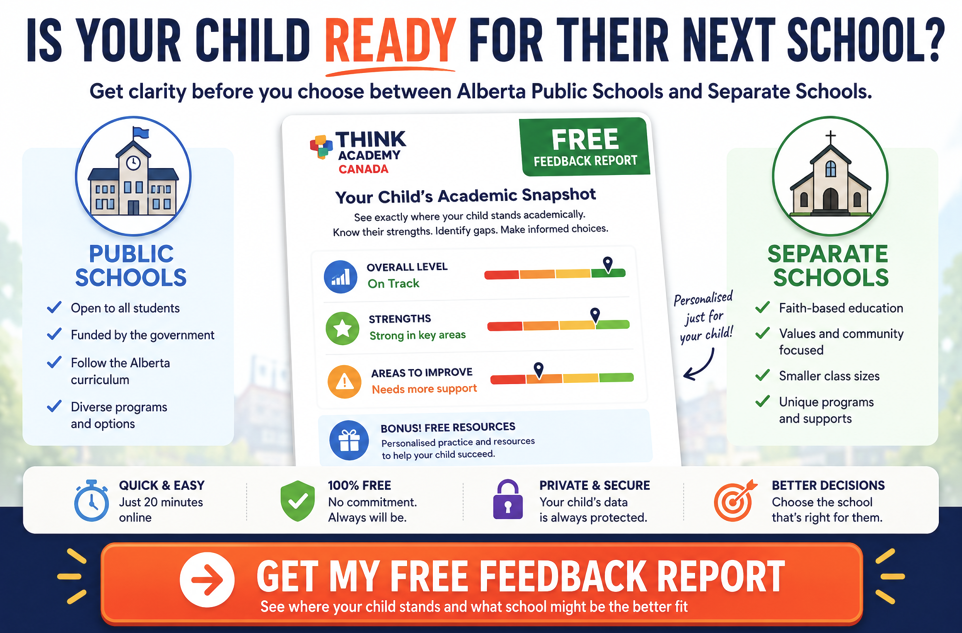
If you are deciding between Alberta public and separate schools, you may be juggling more than academics. You might be thinking about location, bussing, after-school care, and whether your child will feel like they belong. However, the differences can sound confusing at first because both options are publicly funded and follow Alberta’s curriculum. This guide breaks down what is the same, what can differ, and what to ask next.
Intro Choosing a School System Without Guesswork
Many Alberta parents start with one practical question: which nearby school is the best fit for my child right now? However, in Alberta, you may have more than one publicly funded option in the same neighbourhood, including public, separate, and sometimes francophone or charter schools.
Therefore, the most helpful first step is understanding how these systems are set up and what decisions happen at the provincial level versus your local school division (a division is the governing body that runs groups of schools in a region).
Alberta public and separate schools: what is the difference?
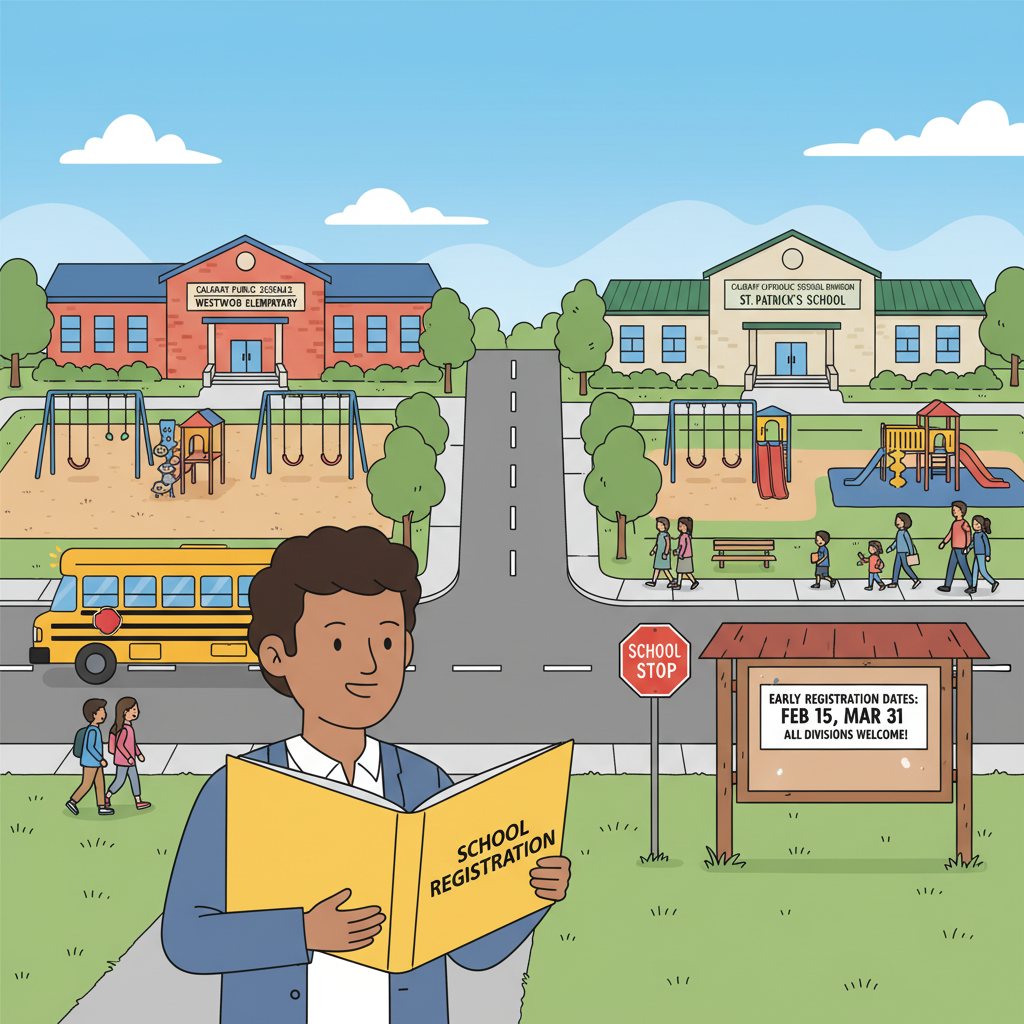
Alberta public schools and separate schools are both part of the publicly funded education system. They must follow Alberta’s curriculum and provincial requirements, and they are overseen by the Alberta government through legislation and regulations.
However, separate schools in Alberta are typically Roman Catholic separate schools, supported by constitutional protections. In practice, that means separate school divisions may include faith-based programming and a Catholic educational environment, while public school divisions are non-denominational.
For a parent-friendly overview of how public and separate school authorities fit into Alberta’s education system, start with the provincial information on school authorities from Government of Alberta: School authorities. You can also review how school board governance works through the Government of Alberta: School boards hub.
What stays the same across systems
Parents often worry that one system will have a weaker academic program. However, Alberta sets a province-wide curriculum, and schools use that curriculum to plan instruction and assessment.
Therefore, your child will learn the same core outcomes (what students are expected to know and be able to do) in key subjects, regardless of whether the school is public or separate. For the official source, you can review Alberta’s curriculum information through Government of Alberta: K–12 curriculum.
- Provincial curriculum expectations apply across publicly funded schools.
- Teachers must meet Alberta certification requirements.
- Report cards and assessment practices follow provincial direction, although formats can vary by division.
What can differ (and why it matters for ages 4–12)
Even when curriculum is consistent, your child’s day-to-day experience can still feel different. That difference often comes from school culture, programming choices, and local policies.
For example, a school’s approach to daily routines, family involvement, extracurriculars, and behaviour expectations may vary by division and by principal. Therefore, it helps to look beyond labels and ask specific questions.
- Religious instruction and celebrations may be present in separate schools.
- Catchment areas (attendance boundaries) and enrolment priorities can differ.
- Transportation eligibility and fees may vary by division and by distance.
- Language options can vary, especially for French programming.
Enrolment and attendance boundaries: how to confirm your options
A common stress point is not knowing whether you are guaranteed a spot. In Alberta, each school authority sets enrolment processes and may manage overflow when schools are full.
Therefore, check your local division’s registration pages and confirm your designated school and any alternative programs. The province’s Government of Alberta: Choosing a school hub is a good starting point because it outlines publicly funded options and next steps.
If you are new to Canada or new to Alberta, you may also want to read the background on Canada’s school structures from a neutral reference like Encyclopaedia Britannica: Education in Canada. For a quick explanation of how separate school systems exist in parts of Canada, Wikipedia: Separate school can help you learn the terminology, then you can verify local rules through Alberta and your school division.
A quick comparison table for busy parents
This table summarizes common differences you may notice. However, local practice matters, so treat this as a starting point and confirm details with your specific school division.
| Topic | Public school division | Separate (often Catholic) school division |
|---|---|---|
| Funding | Publicly funded | Publicly funded |
| Curriculum | Follows Alberta curriculum | Follows Alberta curriculum |
| Religious education | Non-denominational | May include Catholic instruction and traditions |
| Governance | Elected school board (division) | Elected school board (division) |
| Daily school culture | Varies by school | Varies by school; may include faith-based practices |
Questions to ask on your school tour or call
Once you have narrowed down two or three schools, a short, specific list can save you hours. Therefore, consider asking questions that connect directly to your child’s age and personality.
- What does a typical day look like in Kindergarten to Grade 3 versus Grades 4–6?
- How is reading taught in the early grades, and how do you support practice at home?
- How much time is spent on math each day, and how do you help students who are ahead or need reinforcement?
- What are the expectations for homework by grade?
- How do you communicate with families: weekly emails, agendas, apps, or phone calls?
- What supervision and care options exist before and after school?
- If the school is full, what is the overflow plan?
Transportation and time: the hidden deal-breaker
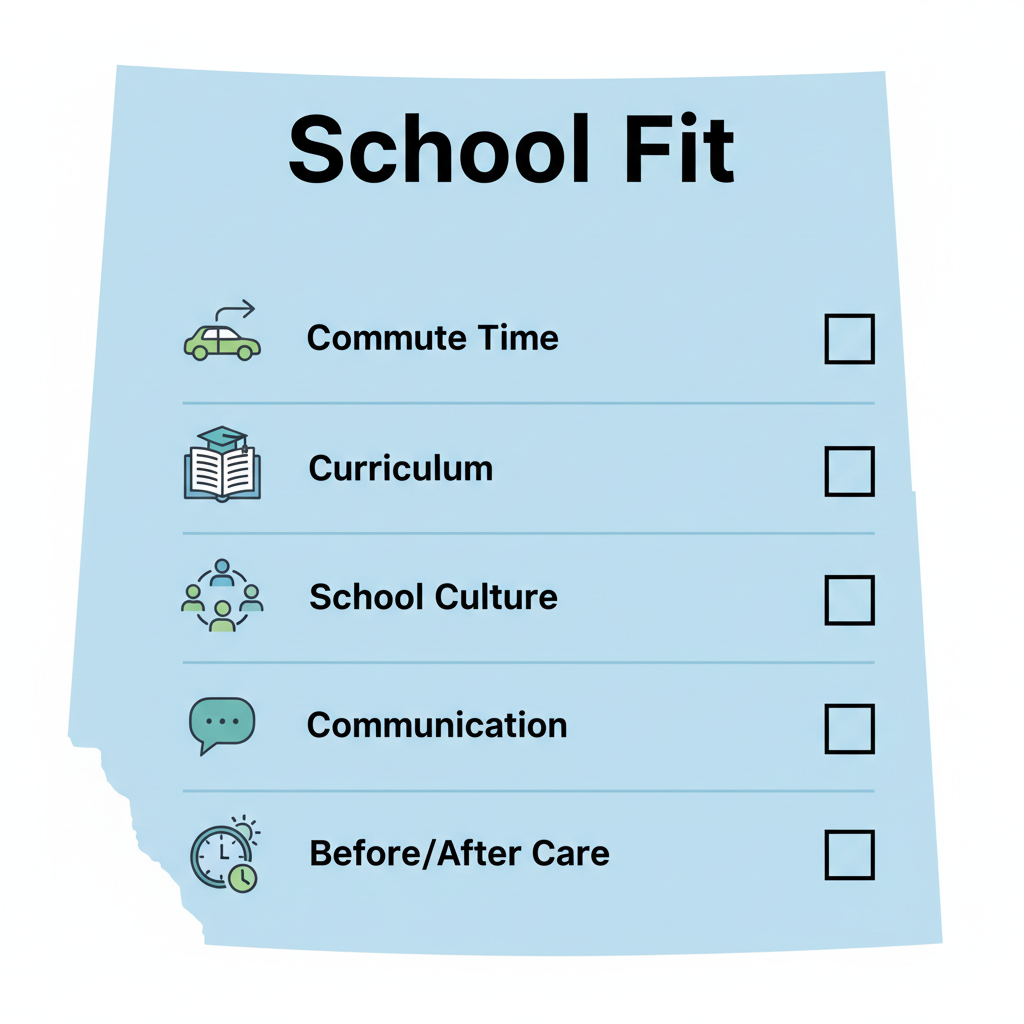
Families often focus on program features and forget the weekly reality of commuting. However, for children aged 4–12, a long daily trip can affect sleep, mood, and after-school time.
Therefore, confirm bussing eligibility, fees, and travel time early. Your local school division’s transportation page is the most accurate source because rules can change by municipality and by school.
How to evaluate “fit” without relying on reputation
It is normal to hear strong opinions from neighbours. However, reputation often reflects one family’s experience at one point in time, and leadership or staffing can change.
Instead, look for concrete indicators you can observe and verify. For example, read the school handbook, ask about daily routines, and note how staff answer questions about student well-being and learning progress.
Tools & Resources (official and parent-friendly)
These links can help you confirm rules and reduce uncertainty, especially during registration season.
- Government of Alberta: Education for official provincial direction and system overviews.
- Government of Alberta: Choosing a school for a province-level explanation of publicly funded school options.
- Government of Alberta: K–12 curriculum to see what students learn by subject and grade.
- Open Government Alberta to search publicly available education publications and reports.
- Government of Alberta: School authorities to understand how divisions are structured.
Concluding Paragraph
When you compare Alberta public and separate schools, you are not just choosing a building. You are choosing routines, communication styles, community feel, and the pace of daily life for your child. Therefore, start with the non-negotiables (distance, care needs, enrolment certainty), then confirm programming and culture with clear questions. With a short checklist and reliable sources, you can make a confident decision that supports your child’s steady growth.
About Think Academy
Think Academy, part of TAL Education Group, helps K–12 students succeed in school today by building strong math foundations and critical thinking skills. At the same time, we focus on the bigger picture—developing learning ability, curiosity, and healthy study habits that inspire a lifelong love of learning. With expert teachers, proven methods, and innovative AI tools, we support every child’s journey from classroom confidence to long-term growth.